Susan Sontag Quotes
Self-censorship, the most important and most successful form of censorship, is rampant. Debate is identified with dissent, which is in turn identified with disloyalty. There is a widespread feeling that, in this new, open-ended emergency, we may not be able to 'afford' our traditional freedoms.
Sontag, Susan. "Real Battles and Empty Metaphors." The New York Times, 10 Sept. 2002.


This became a critically important quotation a half century after it was made. Judge Hand articulated the majority Western and Judeo-Christian value proposition between dissent and heresy. However, for the majority of the Islamic world, the reverse represents the majority value that is held. There is a minority in the West that agrees that avoidance of heresy is paramount and a minority of the Muslim world that agrees that the protection of dissent is the more important value, but the two civilizations were at odds in the 20th and 21st centuries. However, Islam is about 600 years younger than Christianity. 600 years ago, the Christian world agreed with the Muslim society and prevention of heresy was the more important value. The Reformation and the enlightenment followed by the world example of America produced a transformation and this may occur in the majority of the Islamic world in time.


We were in the midst of WWI.

There was much similarity between the methods of the Nazis in Germany and the IRA in Ireland at that time. However, their objectives and philosophies were totally different. Like the Nazis, political opponents were “traitors”.

Wikipedia: This was Debs's most famous speech. It was a socialist antiwar speech while the United States was at war, and it was used against him at his trial. Debs was convicted under the Espionage Law and sentenced to 10 years in prison. President Warren G. Harding commuted the sentence in 1921. The Espionage Act was so written that speaking against the war was defined as “Espionage”. This act and the Alien & Sedition Acts were the greatest infringements on Freedom of Speech in the History of the country and on both occasions, the Supreme Court chose not to get involved.


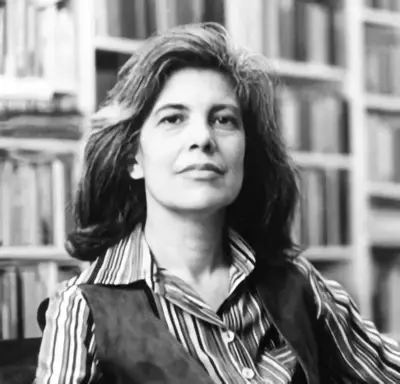
Susan Sontag was an American writer, filmmaker, philosopher, teacher, and political activist. She mostly wrote essays, but also published novels; she published her first major work, the essay "Notes on 'Camp'", in 1964. Her best-known works include the critical works Against Interpretation (1966), Styles of Radical Will (1968), On Photography (1977), and Illness as Metaphor (1978), as well as the fictional works The Way We Live Now (1986), The Volcano Lover (1992), and In America (1999).
