Charles W. Fairbanks Quotes
My name must not be considered for Vice President. Please withdraw it.
He had served as VP with Teddy Roosevelt who was not going to run in 1908 and Fairbanks wanted the job. This statement was made because as the sitting VP he would easily be nominated for the same role and he didn’t want that. TR did not support him however and instead endorsed Taft who with TR’s support won the nomination and the General Election. When TR ran again in 1912 on the Bull Moose ticket, Fairbanks agreed to run as the VP candidate with Charles Evans Hughes and “pay” TR back as Hughes, a brilliant but pompous fellow was expected to win handily with TR’s ex VP—Fairbanks—running with him. However, Hughes and TR split the Republican vote, and Democrat Woodrow Wilson won the Presidency to the shock of Hughes and Fairbanks. They came in 3rd with TR outpolling them.
Charles W. Fairbanks, 1852–1918, Vice President of the United States (IN)—with Theodore Roosevelt, U. S. Senator (Republican, IN), Statement to Republican Party Officials, 1908
Sourced by: Eigen's Political and Historical Quotations


During the last days of the 1912 "Bull Moose" campaign, President Taft's running mate, Taft’s Vice President James S. Sherman, died just before election day. Nicholas Butler was asked to take his place on the Republican ballot; he agreed with this famous condition. The election was won by Democrat Woodrow Wilson and Butler was off the hook.


This is one of the great erroneous predictions of American political history. He was not nominated on the second ballot. Nor on the third; Lincoln was


Before Theodore Roosevelt, American Presidential Candidates had to pretend that they did not seek the presidency and remain passive. However Roosevelt changed that norm and the primary elections, taking the nomination away from a few party leaders, further required Presidential aspirants to campaign. The principle Lomdes articulated was that if called upon, one was obligated to serve, but should not overtly seek the position and wait to be called by the people.


See {639169} and {639180} for more on Roosevelt’s feelings about the vice presidency.

Later, Eisenhower changed his mind and ran for the Republican Presidential Nomination. Truman, who had always been a strong Eisenhower enthusiast, felt that Eisenhower had lied to him and was distrustful of the General ever after.


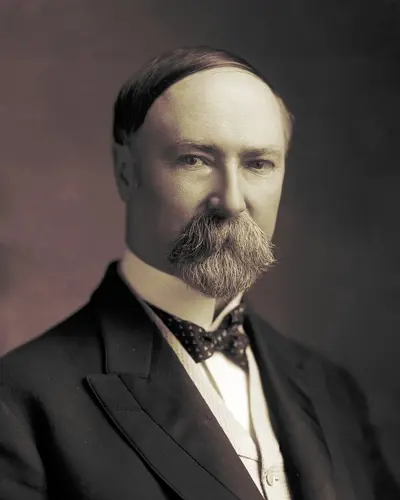
Charles Warren Fairbanks was an American politician who served as a senator from Indiana from 1897 to 1905 and the 26th vice president of the United States from 1905 to 1909. He was also the Republican vice presidential nominee in the 1916 presidential election. Had the Republican ticket been elected, Fairbanks would have become the third (and to date only Republican and non-consecutive) Vice President to multiple presidents, after George Clinton and John C. Calhoun.
