Alice Walker Quotes
My family was a poor farming family, and we lived under absolute segregation.
Walker, Alice. In Search of Our Mothers' Gardens: Womanist Prose. Harcourt Brace Jovanovich, 1983.


His solution was not to change the prejudice or improve the opportunity for Blacks but to have complete separation of the races. See {625687}.


_0_thumbnail_47x47.jpg "William Gregg of South Carolina")
Gregg exclusively hired poor whites to work in his factory, hoping to elevate them into a more civilized—though still a menial—station, providing steady work and granting access to schools.

Justice Marshall, in he early career played an extremely important role in the development of the law vis a vis race and discrimination in America. He went from town to town in the Jim Crow, segregated South filing and often winning civil rights lawsuits. This was an era where lynching was still prevalent, and he was often threatened with bodily harm or death. Justice Ginsberg who also had been a leader in filing and winning civil rights suits but she worked in the area of women’s rights. The host had stated that she and Marshall were the great legal pioneers in civil rights litigation. Ginsberg explained that she hers was a much easier role and Marshall should receive much more credit. This was her reason.


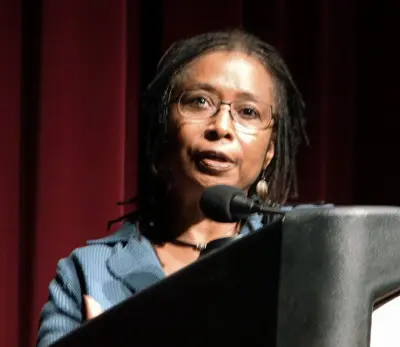
Alice Malsenior Tallulah-Kate Walker is an American novelist, short story writer, poet, and social activist. In 1982, she published the novel The Color Purple, for which she won the National Book Award for hardcover fiction, and the Pulitzer Prize for Fiction. She also wrote the novels Meridian (1976) and The Third Life of Grange Copeland (1970). An avowed feminist, Walker coined the term womanist to mean "A black feminist or feminist of color" in 1983.
