Thomas Clarkson Quotes
Most of the slaves, who were thus unconditionally freed, returned without any solicitation to their former masters, to serve them, at stated wages; as free men. The work, which they now did, was found to better done than before.
Clarkson, Thomas. An Essay on the Slavery and Commerce of the Human Species, Particularly the African. J. Phillips, 1786.

Paul Jennings was at the time a slave belonging to James and Dolley Madison. See {617029} and {618968} for Jennings’ descriptions of them. The $120 gives us an indication of how valuable a slave was at the time. Adjusting for inflation, this would be equivalent to hundreds of thousands of dollars in modern terms.


Lincoln, just before the Civil War, quoted Jefferson that if slavery were not ended in America the results would be disastrous. But Lincoln at the time probably did not imagine how right Jefferson was, and Jefferson himself probably 1 how terrible the Civil War would be.

One of the many complaints that many people made at the time about Smith and his Mormons was that they opposed slavery. In fact, Smith not only opposed it be had a plan for compensating the slave owner and a method for paying for it. Smith was not advocating the kinds of personal lifestyle issues of his church the way modern religious leaders do, but was concerned with the much larger issues of expansionism, corruption of the courts and judiciary, and land distribution. He was a classic reform candidate in that sense. Smith had written to most of the then likely Presidential candidates of both major parties asking for their position on the Mormons who were facing persecution wherever they went. None of the politicians would make any satisfactory commitments. Smith took Direct Action and became the only major religious official to have run for the Presidency of the United States until Pat Robertson tried and failed in 2000. Smith’s assassination shortly thereafter cut his run for the Presidency short before it made much headway and politically he had no chance to affect the race.
It, would automatically emancipate all children born to slaves thereafter. It did not pass. The quote is given as evidence of Jefferson’s attempts to eliminate slavery but is in marked contrast to the fact that he never freed his own slaves nor emancipated slave children (including possibly his own child with his slave Sally Hemmings). In addition, compare this with {629765} and {630991}.


The Czar of Russia was often referred to as “The Autocrat of all the Russians” He was the most entrenched and powerful monarch in the world with absolutely no possibility of his giving up his crown and power. That was the analogy that Lincoln used here to express his pessimistic view that the Southern slave owners would never voluntarily give up their slaves. He was right of course in both cases. Force during and after the Civil War freed the slaves, and the 1917 Russian Revolution ended the Czar’s reign.

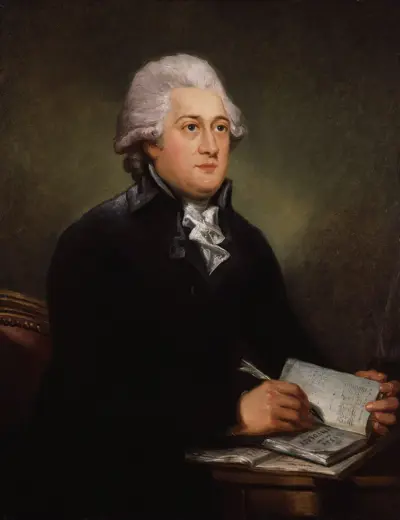
Thomas Clarkson was an English abolitionist, and a leading campaigner against the slave trade in the British Empire. He helped found The Society for Effecting the Abolition of the Slave Trade (also known as the Society for the Abolition of the Slave Trade) and helped achieve passage of the Slave Trade Act 1807, which ended British trade in slaves.
