George Washington Quotes
The scheme, my dear Marqs. which you propose as a precedent, to encourage the emancipation of the black people of this Country from that state of Bondage in wch. they are held, is a striking evidence of the benevolence of your Heart. I shall be happy to join you in so laudable a work.
Washington, George. "To the Marquis de Lafayette, 5 April 1783." The Writings of George Washington, vol. 26, edited by John C. Fitzpatrick, U.S. Government Printing Office, 1938, p. 300.


The first anti-slavery newspaper published in the United States & the first journal in America to advocate immediate, unconditional emancipation

One of the many complaints that many people made at the time about Smith and his Mormons was that they opposed slavery. In fact, Smith not only opposed it be had a plan for compensating the slave owner and a method for paying for it. Smith was not advocating the kinds of personal lifestyle issues of his church the way modern religious leaders do, but was concerned with the much larger issues of expansionism, corruption of the courts and judiciary, and land distribution. He was a classic reform candidate in that sense. Smith had written to most of the then likely Presidential candidates of both major parties asking for their position on the Mormons who were facing persecution wherever they went. None of the politicians would make any satisfactory commitments. Smith took Direct Action and became the only major religious official to have run for the Presidency of the United States until Pat Robertson tried and failed in 2000. Smith’s assassination shortly thereafter cut his run for the Presidency short before it made much headway and politically he had no chance to affect the race.
In this quotation Lincoln got out of the rhetorical trap that Douglas had set for him by disclosing his personal preferences as opposed to the positions that Douglas had accused him of being pledged to. See {615827}.


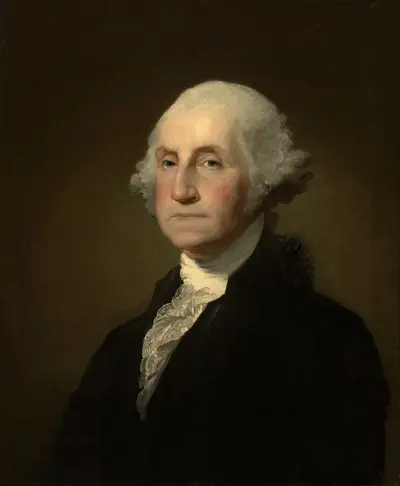
George Washington was the first President of the United States (1789-97), the Commander-in-Chief of the Continental Army during the American Revolutionary War, and one of the Founding Fathers of the United States. He presided over the convention that drafted the current United States Constitution and during his lifetime was called the "father of his country".
