Daniel O'Connell Quotes
Shortly there will not be a slave in the British colonies. Five lines in an Act of Parliament, the other night, liberated nearly 500,000 slaves in the East Indies, at a single blow. The West Indians will be obliged to grant emancipation, in spite of the paltry attempts to prevent it; and we will then turn to America, and to every part of Europe, and require emancipation
Daniel O'Connell, 1775-1847, Irish Nationalist & Lord Mayor of Dublin, Speech, Great Anti-Colonization Meeting in London, 1833
Sourced by: Eigen's Political and Historical Quotations


The Parliament was debating the reaction to the Stamp Act by the American Colonies. One of the members, reflecting a majority view, asked sarcastically when the American Colonies had been emancipated so that they could make their own independent decisions. Pitt then hit this one out of the park by reversing the question.


The first anti-slavery newspaper published in the United States & the first journal in America to advocate immediate, unconditional emancipation

In this quotation Lincoln got out of the rhetorical trap that Douglas had set for him by disclosing his personal preferences as opposed to the positions that Douglas had accused him of being pledged to. See {615827}.

Jefferson’s views, actions and inactions regarding slavery are very complex and contradictory. This quotation is one example of the many statements and activities to end slavery. Yet he never freed his own slaves (as did George Washington) and he fathered a child by one of his slaves with no attempt at freeing even her and the child. The Andrew Dickson White article is one of the first serious studies of the Jefferson contradictions regarding slavery.


This was Lincoln’s first anti—slavery speech and it was memorable

Baldwin was a young lawyer at the time. He represented a shipload of ex-slaves who had taken over their Spanish slave ship and landed in America. The Spanish claimed, the ship owners and some of the crew all claimed the “property.”
Many English slaves had been brought into Ireland by kidnappers and purchasers of English children as described in the quotation by Girald of Wales. The Irish kept them in bondage. In 1171 English invasions of Ireland appeared to be succeeding and the Irish clerics decided that they were being punished by God for the slavery. The edict was issued with the force of law. For insight into the common practice of kidnapping slaves in England, see Council of Westminster.
Lincoln had promised amnesty to Southerners who would pledge loyalty to the Union. What many feared was that this would include slave owners re-enslaving their former "property," or that the government would allow them to do so in order to stop the rebellion.
Lincoln was then a Whig campaigning for his party.

The issue of slavery which had been suppressed in Congress for the first decades of the nation broke out when Missouri was considered for statehood. By previous agreement, slavery was not even discussed in Congress but the time period elapsed. Tallmadge not only proposed that no more slaves could come into Missouri but most shocking to the Southerners was that every person born in the new state would be free at the age of 25. In a generation, there would be no more slavery in Missouri and there would be no economic compensation for slave owners at all. The House of Representatives accepted the amendment, but it failed in the Senate. At that time, Senators were not elected by voters but were appointed by the state legislators and the Southern slave states had a disproportionate share of the senate from a population point of view. But what this quotation shows clearly that a majority of the country in 1819 were opposed to slavery and were willing to end it without compensation.
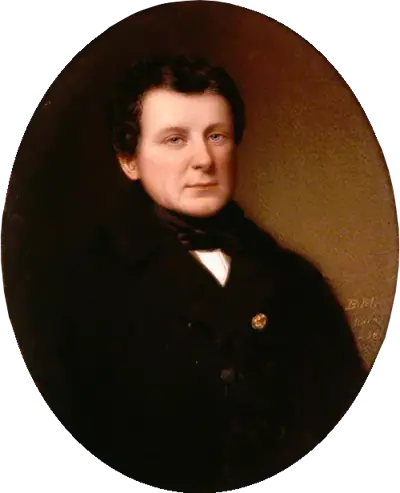
Daniel O'Connell, hailed in his time as The Liberator, was the acknowledged political leader of Ireland's Roman Catholic majority in the first half of the 19th century. His mobilisation of Catholic Ireland through to the poorest class of tenant farmer helped secure Catholic emancipation in 1829 and allowed him to take a seat in the United Kingdom Parliament to which he had twice been elected. At Westminster O'Connell championed liberal and reform causes (he was renowned internationally as an abolitionist) but failed in his declared objective for Ireland: the restoration of a separate Irish Parliament through repeal of the 1800 Acts of Union. Against the background of a growing agrarian crisis and, in his final years, of the Great Irish Famine, O'Connell contended with dissension at home. Criticism of his political compromises and system of patronage led to a split in the national movement he had singularly led.
