Henry Pelham-Clinton, 5th Duke of Newcastle Quotes
Many complaints have reached me from the army of the advantages conferred upon the enemy by the publication of intelligence from the seat of war, not only in letters from the correspondents of the English newspapers, but in letters written by officers to their friends at home in the spirit of confidential intimacy, and which those friends send to newspapers…
Henry Pelham-Clinton, 1811-1864, 5th Duke of Newcastle, British Minister of War, Letter to certain newspapers, December 6, 1854
Sourced by: Eigen's Political and Historical Quotations

At the time, the President thought the accusation about the White House was unlikely and just the accusations of political enemies and he said he would fire anyone who made such a leak. The quote became memorable when it came out that it there were two White House leakers, including the President’s closest political advisor, Karl Rove. Thereafter, the President not only did not fire anyone, but refused to even discuss the matter saying that there were potential criminal proceeding underway.


Meigs had urged McClellan that it was his obligation to keep the President abreast of the planning for the war effort.


There was a major leak of the administration’s contingency plans for war in Europe. FDR had run on a platform not to send American troops to Europe, and this leak, presented as a fete a compli, caused a political upheaval.


Abe Rosenthal, statement to a reporter who he fired for having an affair with a politician, and continuing to cover his politics. There are multiple variations of this quote in circulation – this seems to be the most accurate.


The “gentleman” was a member of Congress. This is an issue between the Congress and the Executive Branch which has existed as long as our Republic: Whether all members of Congress should have access to all classified secret information of the Government. Mrs. Roosevelt who was usually an advocate of transparency, on this issue tended to side with the argument of the executive branch. Note that the arguments made in 1939 are still fought over today.

The queen was a lot more sophisticated about the newspapers than politicians in the 21st century.


Adams was then in the Continental Congress and he and other patriots were learning as much about military methods as possible. For many, secrecy was an entirely new concept. Rush ran the hospitals for the Revolutionary Army and talked to many officers and enlisted men, and also observed much of the British military practices.
Bush had served earlier as the head of the CIA and understood the costs of such better than most. He was put in a difficult position when his son was President and one of the senior White House operatives, for small partisan advantage, leaked the name and identity of Valerie Plame, a covert CIA operative. Bush the father, remained silent even after the leaker was identified.

Wikileaks needs whistleblowers to send it confidential and secret material in order to have something that people might be interested in. And then, it needs continuous money donations to keep the website going. This statement refuted critics who claimed that Assange and his colleagues were just criminal activists who had no public support or interest in what they were doing.

Trust is undermined in 2 ways. Allies and others who speak or negotiation with the government in confidence, lose trust in the government to maintain the appropriate level of confidentiality and security over information. And second, citizens lost trust in the government because they have been secretive and kept information from the citizenry that usually is just embarrassing or being kept secret to avoid opposition. Worst is when the leak shows that the Government has been lying to the public. Where there are what the public regards as legitimate secrets, public trust is not diminished, but those instances are not typical.
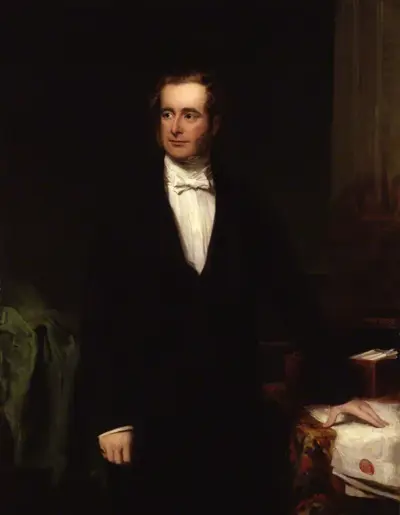
Henry Pelham Fiennes Pelham-Clinton, 5th Duke of Newcastle-under-Lyne, KG, PC, styled Earl of Lincoln before 1851, was a British politician.
