Carl Bernstein Quotes
People would know virtually nothing about their government were it not for confidential sources who can speak without fear of retaliation.
Carl Bernstein, Journalist, NBC Meet the Press, June 16, 2002
Sourced by: Eigen's Political and Historical Quotations

At the time there was no Secrecy & Classification System nor any laws enforcing secrecy or confidentiality. However there was no freedom of information laws of expectations even on the part of journalists. This was the first Freedom of Information policy of the American government. Some politicians were more open than others but there was no national, governmental before this. There were however leakers and whistleblowers though the terms were not in use. Note that Roosevelt herein created the first whistle blower protection—himself.


There has been a constant conflict between the government and the press regarding the right of a journalist to refuse to disclose his/her sources for a story or to reveal his/her notes or outtakes. Reporters would sometimes be subpoenaed and if they refused to testify or disclose the subpoenaed information, they could be held in contempt of court and fined, jailed or both. However, one of the major reasons reporters have been able to get information on the malfeasance and incompetence of government is that leakers and whistleblowers have been willing to provide information to the press is that they are confident that the press will not disclose the source. The courts have ruled that journalists have no special rights regarding subpoenas, so the outcome of the conflict depends on the political decision of the administration. For the 2nd Obama administration, this has his announcement that the Justice Department would not jail reporters who ignored subpoenas. However many proponents of a free press, do not want to depend on the decision of the Attorney General in office and want Congress to pass a Shield Law for journalists.


The George W. Bush Administration had initiated a secret wiretapping program without informing the Congressional Intelligence Committees as required by the statute or requesting a change in the law from the Judiciary Committee. New York Times, however, had discovered the program and published its existence. This was the way that Congress found out about the program that seemed to violate the law. The Attorney General however was critical of New York Times, and expressed concern that the press had published secret material.


The main reason that the English or American Freedom of Information Act is not used so much by individuals is that the executive agencies make the process of obtaining documents very difficult and then when the government stonewalls, the requestor has to spend a great deal of time and often engage an attorney. The result is that few individuals can spend the time or money and the field consists mostly of media and non profit organizations which have staff and resources.


Snowden, was a contract worker for Booz Allan assigned to the National Security Agency (NSA). He felt that some of the NSA activities were illegal and unethical and tried to complain to NSA officials who rebuffed him. Despite the fact that he had signed an agreement not to do so, he copied many critical, classified documents that exposed much of the NSA activities that the NSA officials had denied existed—including lying under oath to the Senate. Laura Poitras, the journalist, was not accused or suspected of anything. However, on the belief, that Snowden might have given her some classified material, the American government prevailed upon the British to seize her personal computer. Snowden made the programs public as the highest level intelligence officials were lying to Congress about them. The position of the US Government was that Snowden had violated American Law. Others praised him for revealing illegal activities in which the government was engaged and was lying about including to the Congressional oversight committees. Snowden repeatedly outsmarted the government and ended up getting asylum in Russia. In the case of the computer material, he had encrypted the material using “strong encryption” which most computer experts believe is impossible even for the best code breakers and computers to crack. See {628105} . In this quotation he argues that all journalists should use strong encryption on ALL of their notes and other materials that they receive from confidential sources. Government officials had tried to keep strong encryption secret even though it was invented by a private scientists with no government support or involvement. They failed, but have been trying to find a way to defeat strong encryption since. Ironically, most non-technical private individuals and companies do not use it even though it is quite easy and the software is free. Editors and publishers are ambivalent in that they could not comply with court orders or show them to employees even though it is their own property if the individual reporter or the source did not want them to.

He was commenting on the new Donald Trump's attacks onthe media.


In modern times, there have been many incidents of members of the press not supporting the current war effort. Sometimes, it is the greed to get a story, and other times, it is to advocate an alternate strategy. Most often it is a belief that in democracy, only a knowledgeable public can govern the government. The administration or general cannot be relied upon to provide accurate information. Many think The Vietnam War started this problem, but it has been ongoing ever since the Revolution. In the War of 1812, with many Americans dying fighting, other Americans were critiquing the war infuriating the military and the President. Similarly, in all other wars including the Civil War. The relationship between Grant and the Press was as vitriolic as that of the Vietnam War. The war where there was the least conflict between the military and the press was WWII where press were given total access to the front lines without the controls that developed later in the Iraq War.


The George W. Bush administration used secrecy and classification to an extreme that few previous administrations ever had in modern times.
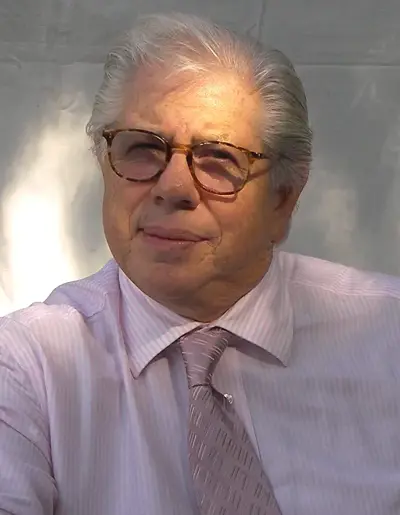
Carl Bernstein is an American investigative journalist and author.
