Percy Bysshe Shelley Quotes
Man has no right to kill his brother. It is no excuse that he does so in uniform: he only adds the infamy of servitude to the crime of murder.
Percy Bysshe Shelley, 1792-1822, English Poet & Reformer, A Declaration of Rights, 1812
Sourced by: Eigen's Political and Historical Quotations


Ataturk was a young major at the time commanding troops of a weak and corrupt Ottoman regime. However a combined English and French (the strongest military powers in Europe) invasion of the Gallipoli Peninsula threatened to capture the Turkish capital, Constantinople. Ataturk alone rallied the Turkish defenders and fought the invaders to a standoff in long drawn out battle with huge casualties on both sides. Ataturk became a national hero. Although Ataturk thereafter was very reluctant to use military force or endanger troops, the thing he always thought worth the supreme sacrifice (including his own) was the independence and sovereignty of the nation. See {584502} for his continuing belief in this type of sacrifice.


Berger was actually prosecuted, convicted, and sentenced to 20 years in prison, for this editorial. The House refused to seat him after the 1918 election (see {587981}); his constituents re-elected him in 1920 anyway. Finally the Supreme Court overturned his conviction, and he was again seated in Congress.

Description of one of his experiences in the Spanish American War.


See {613496} for the origin of the “thrashing a cannibal” phrase.


This was a precursor of the total war views of William Tecumseh Sherman and Ulysses S. Grant during the American Civil War half a century later.

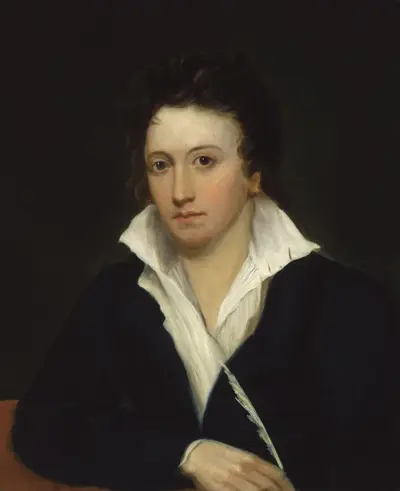
Percy Bysshe Shelley was one of the major English Romantic poets. American literary critic Harold Bloom describes him as "a superb craftsman, a lyric poet without rival, and surely one of the most advanced sceptical intellects ever to write a poem." A radical in his poetry as well as in his political and social views, Shelley did not achieve fame during his lifetime, but recognition of his achievements in poetry grew steadily following his death and he became an important influence on subsequent generations of poets including Browning, Swinburne, Hardy and Yeats.
