Lee Iacocca Quotes
Loan guarantees, I soon learned, were as American as apple pie. Among those who had received them were electric companies, farmers, railroads, chemical companies, ship builders, small businessmen of every description, college students and airlines In fact, a total of $409 billion in loans and loan guarantees were outstanding at the time.
Chrysler had gotten into cash flow difficulty and could not borrow enough money to keep open until they could pay their bills. Their credit was not good enough for most lenders. Iacocca approached the Federal Government and asked for a Federal loan guarantee of about $1 billion. Some members of Congress and public critics were outraged that a private company might get a Government bail out in the form of a loan guarantee. Extremists of both parties did not want to set such a precedent of using Federal money to assist private corporations. Iacocca was quite defensive about asking for what seemed to be a precedent setting request. However, he then found out that it would set no precedent at all. Chrysler got the loan, paid all its creditors, paid back the loan with interest, and the company did not go under, but did well for a while.
Lee Iacocca, CEO Chrysler, President, Ford Motor Company, Autobiography, 1984
Sourced by: Eigen's Political and Historical Quotations


He had already decided to save General Motors which was much larger and more critical to the national economy. The normal capitalistic broken down and there were no private firms that were willing to invest, control and continue the companies at any price. There were 1 million immediate jobs at stake with GM plus the collapse of the American Auto Industry including dealers and suppliers. With Chrysler, there were only 300,000 immediate jobs at stake. Ironically, one of the major reasons for trying to save both companies was the fact that Summers team had discovered that the companies were very badly managed. If the bailout could be leveraged to force radical management change and reform, the chances of success would have been much greater than if the companies had been well managed but were still losing money rapidly. The policy decision was brilliantly successful. The reformed auto companies quickly became profitable, and the taxpayer loans were paid back early with interest to and profits to the taxpayers. All those jobs and an iconic American industry not only were preserved but became very profitable and strong and in the final analysis, it did not cost the taxpayers even one dollar. Ford was in less trouble, but if the other two companies failed, the Ford suppliers would mostly fail, and Ford also would have gone down.


See Daniel Webster for an earlier expression of this notion.

The 7 percent was the interest students had to pay for the Federal Student Loan Program. The banks in contrast were able to obtain money at the Federal Reserve Bank Discount Window at no interest cost. Draut was one of those in the Occupy Wall Street Movement who could not understand why the government provided so much help to the banks relative to that given to students and most other segments of society. Draut, and other protestors, not only thought that the differential favoritism to the banks was unfair, but unjust in the sense that in substantial part the Meltdown of 2008 was the fault of the banks while the students and most of the other elements of American society were the victims. Both the George W. Bush and Obama administrations believed that even though the banks may have been irresponsible and the cause of much of the economic dilemma of the nation, if the banks would be allowed to fail, the Great Recession would have become a major depression and the suffering of the entire country would have been magnified many times, so Wall Street and the banks were bailed out to stave off a much worse economic disaster. It was clearly unfair and unjust, but generally perceived to have been necessary by the politicians and economists.


All the objections that Coolidge had in his veto message, were not convincing to modern Presidents and members of Congress as well as well the American people. Our Agricultural policy has had all these elements for years now.


The debate was on a bill to provide a 9.5 million pound subsidy to the Cunard company which had run out of money trying to build the first over 1000 foot ocean liner. Like the Hoover administration in the U. S, the idea of government economic development was not approved by the British Government. However, at the urging of Kirkwood. Lord Weir and the Prince of Wales the subsidy was voted. The result of the bailout was The Queen Mary.
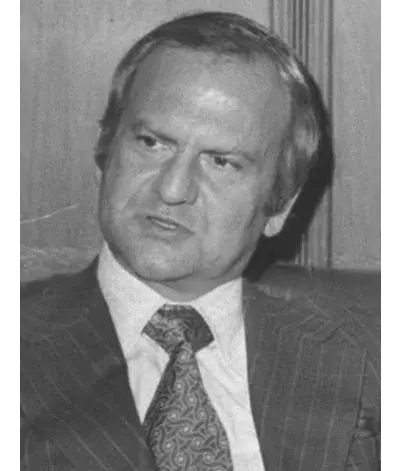
Lido Anthony "Lee" Iacocca was an American automobile executive best known for the development of the Ford Mustang and Ford Pinto cars while at the Ford Motor Company in the 1960s, and for reviving the Chrysler Corporation as its CEO during the 1980s. He was president and CEO of Chrysler from 1978 and chairman from 1979, until his retirement at the end of 1992. He was one of the few executives to preside over the operations of two of the Big Three automakers.
