David Kirkwood Quotes
I welcome this new ship, not only for the good that it will bring to my own constituency, but for what I really believe it means to the shipbuilding and engineering industries of this country … as long as this ship lies like a skeleton in my constituency, so long will depression last in this country, because as it lies there … it shouts, “Failure! Failure!” To the whole of Britain.
The debate was on a bill to provide a 9.5 million pound subsidy to the Cunard company which had run out of money trying to build the first over 1000 foot ocean liner. Like the Hoover administration in the U. S, the idea of government economic development was not approved by the British Government. However, at the urging of Kirkwood. Lord Weir and the Prince of Wales the subsidy was voted. The result of the bailout was The Queen Mary.
David Kirkwood, *, Scottish Member of the British Parliament (Socialist, Clydebank), Parliamentary Debate, March 1934
Sourced by: Eigen's Political and Historical Quotations


Chrysler had gotten into cash flow difficulty and could not borrow enough money to keep open until they could pay their bills. Their credit was not good enough for most lenders. Iacocca approached the Federal Government and asked for a Federal loan guarantee of about $1 billion. Some members of Congress and public critics were outraged that a private company might get a Government bail out in the form of a loan guarantee. Extremists of both parties did not want to set such a precedent of using Federal money to assist private corporations. Iacocca was quite defensive about asking for what seemed to be a precedent setting request. However, he then found out that it would set no precedent at all. Chrysler got the loan, paid all its creditors, paid back the loan with interest, and the company did not go under, but did well for a while.


The “surge” was an increase in the number of troops deployed in the Iraq War at the time as things were not going well in the war. However, the Senator represented New Orleans and the cleanup and reconstruction effort after Hurricane Katrina there was not going well either. Landrieu used the example of the surge in the war effort to advocate a larger effort in New Orleans.

This sura poses a particularly distressing problem to many Islamic theologians and leaders. Since the closing of Islam in the Middle Ages, the Muslim world has not been as successful as has that of those that they would call disbelievers. But disbelievers were not to be successful. To rationalize this with the reality of history they speculated: What the West has achieved is not success. Evil corrupt rulers of Islamic nations have been holding the Islamic countries back. Islamic nations are punished by Allah because they have not spread Islam as Allah commanded. The barren traditional Islamic lands do not allow development and competition in the world. The latter a major reason there is so much enmity towards Israel and Turkey. The Turks who have become secular and the Israelis who were Jews both developed modern industrial countries without oil. The disbelievers had been extremely successful and this was not only a humiliation but threatened the understood integrity of Islam.

The word “proprietor” at the time meant someone who had title to land. The title was then almost always tied up with the aristocratic titles. “Great proprietors” were therefore nobles who owned and controlled large land holdings. The “improvers” tended to be the businessmen—especially the manufacturers and the transportation magnates. Large landowners could just make money by renting parts of their land to tenant farmers. They needed no capital, no vision, not much skill or talent, and they didn’t have to take any risks.

This was written in the 3rd year of the Great Depression which was worldwide. In the beginning of this article, he decried the lack of leadership in most of the world {629443}, but his estimate of the resiliency of capitalism was positive.
This was the classic weakness of colonies where the colonial power was only interested in importing a raw material—in this case, gold. Everything else tends to be ignored—even today. With independence, things often do not change and the export of raw material like oil, tin or lumber dominates the whole economy to the exclusion of the rest of the economy


The Progressive article was an interview with Movie Director and Screenwriter Oliver Stone who told the interviewer that he had learned of this quotation when he did his research for his film, South of the Border where he had several interviews with President Kirchner.

He had already decided to save General Motors which was much larger and more critical to the national economy. The normal capitalistic broken down and there were no private firms that were willing to invest, control and continue the companies at any price. There were 1 million immediate jobs at stake with GM plus the collapse of the American Auto Industry including dealers and suppliers. With Chrysler, there were only 300,000 immediate jobs at stake. Ironically, one of the major reasons for trying to save both companies was the fact that Summers team had discovered that the companies were very badly managed. If the bailout could be leveraged to force radical management change and reform, the chances of success would have been much greater than if the companies had been well managed but were still losing money rapidly. The policy decision was brilliantly successful. The reformed auto companies quickly became profitable, and the taxpayer loans were paid back early with interest to and profits to the taxpayers. All those jobs and an iconic American industry not only were preserved but became very profitable and strong and in the final analysis, it did not cost the taxpayers even one dollar. Ford was in less trouble, but if the other two companies failed, the Ford suppliers would mostly fail, and Ford also would have gone down.

The slogan was created by Martin Sorrell of the Sacchi & Sacchi Advertising Company.
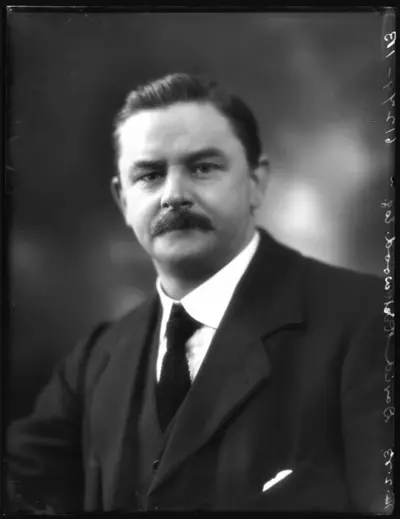
David Kirkwood, 1st Baron Kirkwood, PC was a British politician, trade unionist and socialist activist from the East End of Glasgow, Scotland, viewed as a leading figure of the Red Clydeside era.
