Horace Walpole Quotes
Let the French but have England, and they won't want to conquer it.
Walpole, Horace. The Letters of Horace Walpole, Earl of Orford. Richard Bentley, 1857.


Eisenhower was clear on this point but the neoconservatives of the Republican party advocated just the opposite and decades later would influence American foreign policy to have a different view and aggressively export American democracy as in the Iraq War.

American Presidents after Wilson have not, in general, shared this view. By the latter part of the 20th century judgmentalism was a major component of American foreign policy and reached its zenith with the administration of George W. Bush.

At the time, Palestine was technically Turkish territory. Turkey was one of the defeated axis powers in World War I. England, as part of the World War I peace treaties, had control over Palestine as well as most of the rest of the Middle East.


In 1908 Austria had designs on the Balkans, whose small countries have been fought over for years.

In 1884 Germany had become active in its colonization and outmaneuvered England in taking over Cameroon. Then Germany showed some interest in a part of New Guinea. The English resisted, not for any geopolitical reasons but because the British leaders did not want to be bested by Bismarck.
This was very much a minority opinion at the time, and has much historical significance as he was the father of the British Prime Minister, Neville Chamberlain, 1869-1940, whose appeasement of Germany led to Word War II. . See {585941}.


The Russian motivation for going to the aid of Serbia when the Austro-Hungarian Empire attacked that country was religious affinity. Both were of the Orthodox Church and the Orthodox Slaves had historically been attacked by the Roman Catholic Teutons. Russia had exercised hegemony over regions outside of Russia where there were Christian Orthodox co-religiouists.

stating that war was obsolete See {640087} for the quotation of exactly what Angell wrote.


He had been exiled to the United States.


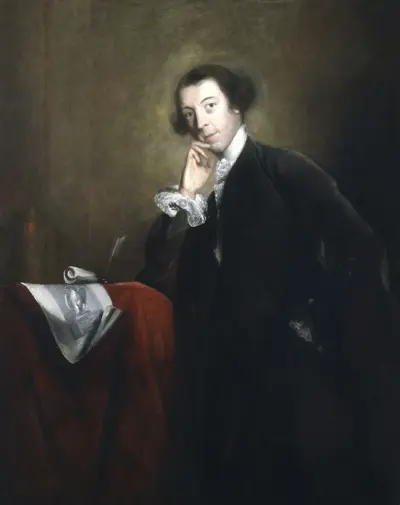
Horatio Walpole, 4th Earl of Orford, also known as Horace Walpole, was an English writer, art historian, man of letters, antiquarian and Whig politician.
