Joseph Hume Quotes
Land, in England, is valuable, because we have highly-paid artisans to consume the produce on the spot.
Hume, Joseph. "Corn Laws." Hansard's Parliamentary Debates, 3rd ser., vol. 21, T. C. Hansard, 1834, cols. 1197-1216.


Paine, one of America’s founding fathers and the man most responsible for influencing Americans to revolt, is generally not given much attention in modern times. One of the main reasons was that his philosophy regarding land and land ownership is today considered socialist if not communist. Paine’s other views are mostly Apple pie American, but this is shocking to many Americans.

Note that although the industrial revolution was beginning, the value of factories, inventory, machines, and raw materials were not yet recognized by some of the leading intellectuals of America. The perspective was totally agricultural.


Fortunately for America, Jefferson did not get his wish. Jefferson did mellow on this point as he got older. See {606440} for a related quotation 27 years later.

This was one of the early suggestions for providing jobs for the unemployed to work at developing the national infrastructure. In this case if highways and the river could be improved, transportation would allow goods to be reach more of the country cheaper. The CCC and the Job Corps of America would use a similar reasoning for public employment.

While Turgot was right about so much, this was one of his big errors—the assumption that land was fundamental to and necessary for, wealth. In many countries it is still true, but of the recent billionaires like Warren Buffet, Bill Gates, Carlos Slim and most others, they own very little land. In the United States and Canada, there are large tracts of land that few or no one will buy and a cast majority of people do not make their living from land.

The word “proprietor” at the time meant someone who had title to land. The title was then almost always tied up with the aristocratic titles. “Great proprietors” were therefore nobles who owned and controlled large land holdings. The “improvers” tended to be the businessmen—especially the manufacturers and the transportation magnates. Large landowners could just make money by renting parts of their land to tenant farmers. They needed no capital, no vision, not much skill or talent, and they didn’t have to take any risks.


This was the classic weakness of colonies where the colonial power was only interested in importing a raw material—in this case, gold. Everything else tends to be ignored—even today. With independence, things often do not change and the export of raw material like oil, tin or lumber dominates the whole economy to the exclusion of the rest of the economy

This is a classic illustration of a quotation illustrating the problem that political discussions have with the issue of causality. Conrad is absolutely correct in stating that investment and innovation as the direct cause for most productivity. However, without the demand created by consumption (or the prospect of it) there will be little capital and effort at innovation. There is a causal chain and different ideological proponents argue for their preferred link in the chain tending to ignore the other links. Many liberals tout increasing consumption and pay little attention to the investment and innovation—an error of the opposite of Conrad’s.


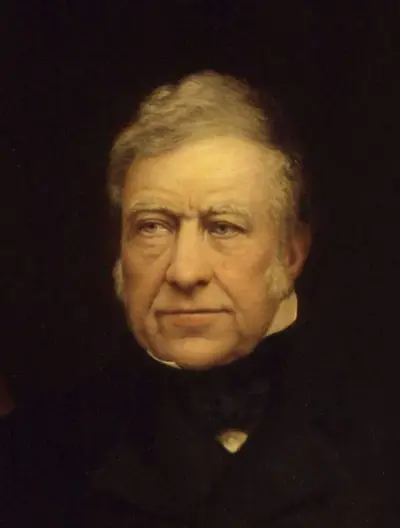
Joseph Hume FRS was a Scottish surgeon and Radical MP.
