Blanche K. Bruce Quotes
It will not accord with the laws of nature or history to brand colored people a race of cowards. On more than one historic field, beginning in 1776 and coming down to this centennial year of the Republic, they have attested in blood their courage as well as a love of liberty.
Bruce was the first, and through the 20th Century, and only Black Senator from Mississippi. He was the first Black Senator to serve a full term. Elected during reconstruction, he was the voted out of office when Blacks were prevented from voting. See {625745}.
Blanche K. Bruce, 1841-1898, U. S. Senator (Republican, MS), U. S. Register of the Treasury, Senate Speech, March 31, 1876
Sourced by: Eigen's Political and Historical Quotations

Jamaica, then part of the British Empire which had outlawed slavery, was quite racially integrated with negroes and mulattos in civil positions such as magistrate. When the ship landed, the slave, John Anderson, was kept locked below deck since if he ran off and reached shore, the Jamaican authorities would have declared him a free man. The presence of the captive negro slave leaked out and a group of Jamaicans boarded the ship uninvited and forcibly removed Anderson, He was taken before a Jamaican magistrate who declared him a free person. The ship’s captain demanded that the authorities return the American private property which had been stolen from an American ship by a “mob”. Harrison, the US Counsel complained to the Jamaican Governor of the “Insult” to the American Flag that had taken place and demanded redress. In both efforts, the original decision of the magistrate was supported and Anderson was a free man. Harrison, an ardent Southerner from Virginia was apoplectic and asked the State Department to make this case a major issue in relations with London. His description of the public opinion then in Jamaica was classic. His racial bias was even supplemented by a virulent anti-Semitism because not only had Jewish Jamaican merchants supported abolition of slavery but some had intermarried with Negroes who had converted to Judaism.


The issue of slavery which had been suppressed in Congress for the first decades of the nation broke out when Missouri statehood was considered. By previous agreement, slavery was not even discussed in Congress but the time period elapsed. Tallmadge not only proposed that no more slaves could come into Missouri {613176} but most shocking to the Southerners was that every person born in the new state would be free at the age of 25. In a generation, there would be no more slavery in Missouri and there would be no economic compensation for slave owners at all. The House of Representatives accepted the amendment, but it failed in the Senate. At that time, Senators were not elected by voters but were appointed by the state legislators and the Southern slave states had a disproportionate share of the senate from a population point of view. But what this quotation shows clearly that a majority of the country in 1819 were opposed to slavery and were willing to end it without compensation.


The letter was written in the supposed style of a Black after Emancipation and includes most of the ugly false stereotypes of the worst of the racists of the present and the slaveowners of past times. Williams stated that he was not a racist and was trying to make a point about freedom required risk and responsibility. However, the effort was interpreted by many people, Black and white, to be insulting and a put down of African Americans. At the same time, although most of the Tea Party members were not racists, most of the racists in America were supporters of the Tea Party. Those people interpreted the quotation as "telling it like it is" about Blacks who do not want the responsiblities and risks of freedom and are not yet developed sufficiently to be equal citizens in a democracy.

Although Wedgwood was a business man and ceramic manufacturer, he was a staunch abolitionist. He made these medallions by the thousands and gave them to all who would receive them. The text became the motto of the anti-slavery society. It was one of the first examples of a logo – a symbol for a political cause being very effective.

This quotation is very interesting historically. Despite the fact that Washington DC was a thoroughly racially segregated city, and the Southern racists controlled much of Congress, Blacks as well as whites were welcome in the Congressional galleries, and they attended many debates. Slavery and equality were not just debated in the 1850s but the issue was in constant friction from the earliest Congress.


His solution was not to change the prejudice or improve the opportunity for Blacks but to have complete separation of the races. See {625687}.

Parker and other escaped slaves in Christiana fought off slave catchers and killed the slave owner leading them. Charged with treason, he escaped to Canada with his family and lived there the rest of his life. While not a polished writer, after he himself had escaped and went to Christiana and leaned to read and write. He wrote this narrative of his life as a slave—one of the few written works we have from slaves.
Parker and other escaped slaves in Christiana fought off slave catchers and killed the slave owner leading them. Charged with treason, he escaped to Canada with his family and lived there the rest of his life. While not a polished writer, after he himself had escaped and went to Christiana and leaned to read and write. He wrote this narrative of his life as a slave—one of the few written works we have from slaves.


Louis Napoleon Bonaparte. The “colonies” to which we was referring were the French Colonies in the Caribbean—particularly Haiti. The Black slaves had revolted against the slave-owners and had taken over all positions of authority and wore the uniforms and symbols of power including the epaulettes—the gold braid shoulder pieces that were symbols of high rank in military and diplomatic uniforms which were worn on all official occasions. Napoleon never did make good on his vow. He had many more problems with his own wars and governance in Europe. This quote does demonstrate the racism that existed in supposedly tolerant France.


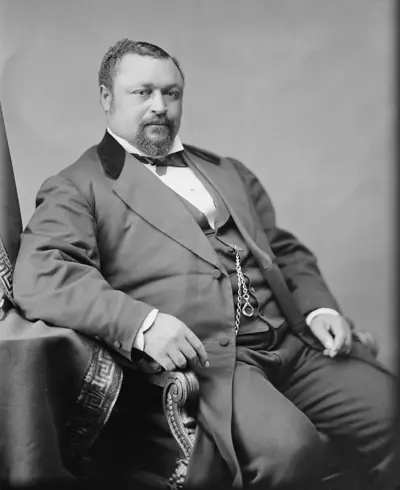
Blanche Kelso Bruce was born into slavery in Prince Edward County, Virginia and went on to become a politician who represented Mississippi as a Republican in the United States Senate from 1875 to 1881. He was the first elected African-American senator to serve a full term (Hiram R. Revels, also of Mississippi, was the first African American to serve in the U.S. Senate but did not complete a full term).
