Samuel Hopkins Quotes
It seems absolutely necessary something should speedily be done with respect to the slaves among us, in order to our safety, and to prevent their turning against us in our present struggle, in order to get their liberty….set blacks at liberty ourselves, by some public acts and laws; and then give them proper encouragement to labor, or take arms in the defense of the American cause, as they shall choose. This would at once be doing them some degree of justice, and defeating our enemies in the scheme they are prosecuting.
Hopkins, an early abolitionists, along with many others saw the danger when the British promised freedom to all Negro slaves who would help their cause.
Samuel Hopkins, 1721-1803, Congregationalist Minister, Proposal, 1776
Sourced by: Eigen's Political and Historical Quotations


One of the arguments against Negro emancipation from slavery was that they were not prepared for freedom. This famous quote countered that argument. Ironically, a similar argument was made years later with respect to Women’s Suffrage. It was argued that women first had to learn about voting and politics. This quotation was again used by the suffragettes long after Heyrick’s death.


Douglass tried to talk Brown out of what Douglass thought would be a suicide raid. Douglass was right.
American reformers followed slavery issues in Africa and elsewhere. The status of Africa was particularly important as the notion of extensive American Black colonization was still viable to many.


These lines were quoted by W. E. B. Dubois in his The Souls of Black Folk, 1905


This prophecy written in the later years of Jefferson’s life turned out to be all too true. St. Domingo was an Island in the Caribbean where slavery produced a bloody war. The American Civil War would be far worse.

The Emancipation Proclamation was issued by the commander in chief as a wartime necessity. Any future President could undo that proclamation. However, the 13th Amendment outlawed slavery forever regardless of the desires of the Congress, Presidents, or State governments.


Although slavery and indentured servitude existed amongst the Ancient Jews, the slaves had to be emancipated after 6 years. The slave owners had to give the emancipated slave a “nest egg” so that he/she could integrate into the community. The reason that this quotation is very important for Americans is twofold: First, many of the Northern states embodied this concept of a maximum term regarding indentured servitude (without the nest egg however). Second and most important is that the Southern slave owners and slavery apologists pointed to the Old Testament as a moral justification for slavery—ie God’s Chosen People had slaves under His law; so it cannot be immoral as abolitionists claim. However, hypocritically they used the Bible to justify their institution of slavery, but never followed God’s requirement of emancipation after 6 years, much less the nest egg concept.
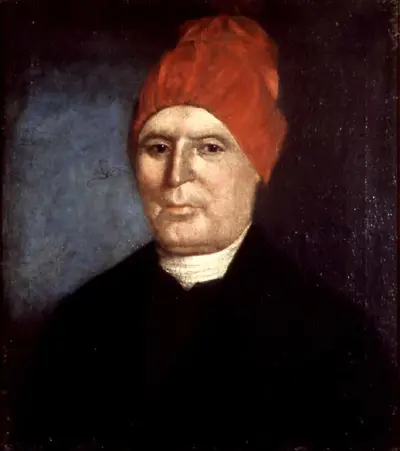
Samuel Hopkins was an American Congregationalist theologian of the late colonial era of the United States. Hopkinsian theology was named for him. Hopkins was an early abolitionist, saying that it was in the interest and duty of the U.S. to set free all of their slaves.
