John Brown Quotes
Come with me, Douglass, I will defend you with my life. I want you for a special purpose. When I strike the bees will begin to swarm, and I shall want you to help hive them.
Douglass tried to talk Brown out of what Douglass thought would be a suicide raid. Douglass was right.
John Brown, 1800-1859, Abolitionist, Invitation to Frederick Douglasss to join in the raid on Harper’s Ferry, Chamberburg, PA, 1859
Sourced by: Eigen's Political and Historical Quotations


Many of the workers never returned.

Federal authorities had jailed Glover pending his return to his Missouri owner. A local Wisconsin judge issued an order for Glover’s release on the grounds that slavery was illegal in Wisconsin and he was entitled to freedom. The Federal authorities refused to release the escapee. The Wisconsin mob then stormed the jail and broke Glover out. Glover was helped to get to Canada and final freedom by the people of Wisconsin, but Booth was prosecuted and convicted under the Fugitive Slave Act. He was later pardoned. See {587921}.
Hopkins, an early abolitionists, along with many others saw the danger when the British promised freedom to all Negro slaves who would help their cause.


American reformers followed slavery issues in Africa and elsewhere. The status of Africa was particularly important as the notion of extensive American Black colonization was still viable to many.

Southerners complained that abolitionists were advocating revolution. While most did not, some did advocate mass rebellion. The fact that Remond was himself a Black, created even more distress to the South.

He drove the British into the sea when no one expected that outcome.

These lines were quoted by W. E. B. Dubois in his The Souls of Black Folk, 1905

Although Wedgwood was a business man and ceramic manufacturer, he was a staunch abolitionist. He made these medallions by the thousands and gave them to all who would receive them. The text became the motto of the anti-slavery society. It was one of the first examples of a logo – a symbol for a political cause being very effective.

One of the arguments against Negro emancipation from slavery was that they were not prepared for freedom. This famous quote countered that argument. Ironically, a similar argument was made years later with respect to Women’s Suffrage. It was argued that women first had to learn about voting and politics. This quotation was again used by the suffragettes long after Heyrick’s death.


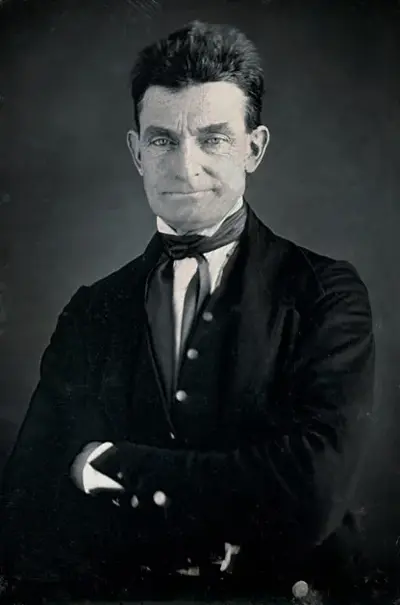
John H. Brown was an American abolitionist leader. Brown felt that violence was necessary to end American slavery, as years of speeches, sermons, petitions, and moral persuasion had failed.
