Book of Exodus Quotes
And if thy brother, an Hebrew man, or an Hebrew woman, be sold unto thee, and serve thee six years; then in the seventh year thou shalt let him go free from thee. And when thou sendest him out free from thee, thou shalt not let him go away empty: Thou shalt furnish him liberally out of thy flock, and out of thy floor, and out of thy winepress: of that wherewith the LORD thy God hath blessed thee thou shalt give unto him
Although slavery and indentured servitude existed amongst the Ancient Jews, the slaves had to be emancipated after 6 years. The slave owners had to give the emancipated slave a “nest egg” so that he/she could integrate into the community. The reason that this quotation is very important for Americans is twofold: First, many of the Northern states embodied this concept of a maximum term regarding indentured servitude (without the nest egg however). Second and most important is that the Southern slave owners and slavery apologists pointed to the Old Testament as a moral justification for slavery—ie God’s Chosen People had slaves under His law; so it cannot be immoral as abolitionists claim. However, hypocritically they used the Bible to justify their institution of slavery, but never followed God’s requirement of emancipation after 6 years, much less the nest egg concept.
Old Testament, Book of Exodus, 21:12-14
Sourced by: Eigen's Political and Historical Quotations

The newly freed slave would have no practical chance of success in a capitalistic, competitive society unless he had the basic tools and property to earn a living and compete. This was mandated for the ancient Jews in the Law of Moses. This was not considered too seriously in Reconstruction after the Civil War, and much of the discrimination and racism might have been avoided if the freed slaves were all given some land as many were in general homesteading programs. These Blacks, and those that went to the industrial North where business owners provided them with the tools and resources in exchange for their labor, were generally the most successful.


Hopkins, an early abolitionists, along with many others saw the danger when the British promised freedom to all Negro slaves who would help their cause.


American reformers followed slavery issues in Africa and elsewhere. The status of Africa was particularly important as the notion of extensive American Black colonization was still viable to many.

In the first article of its first Constitution Vermont banned slavery and indentured servitude. Delaware had previously done it. See {621427}

These lines were quoted by W. E. B. Dubois in his The Souls of Black Folk, 1905
Parker and other escaped slaves in Christiana fought off slave catchers and killed the slave owner leading them. Charged with treason, he escaped to Canada with his family and lived there the rest of his life. While not a polished writer, after he himself had escaped and went to Christiana and leaned to read and write. He wrote this narrative of his life as a slave—one of the few written works we have from slaves.
One of the arguments against Negro emancipation from slavery was that they were not prepared for freedom. This famous quote countered that argument. Ironically, a similar argument was made years later with respect to Women’s Suffrage. It was argued that women first had to learn about voting and politics. This quotation was again used by the suffragettes long after Heyrick’s death.


This law required the treatment of Blacks as whites were then treated with respect to indentured servitude—a limit of 10 years after which the person would be free. However, this law was poorly enforced. The “General Court” was the name for the legislature of the Rhode Island colony.

This was part of his presentation to Northern influential business men showing them what he claimed was the New South. He was particularly complimentary about the negro Christian viewpoint that inhibited revenge or retaliation for their terrible treatment. The favorable lines about Negroes were well received by Northerners. However, they were mostly unaware of his racist views he expressed when in the South. See Quotation 643649.


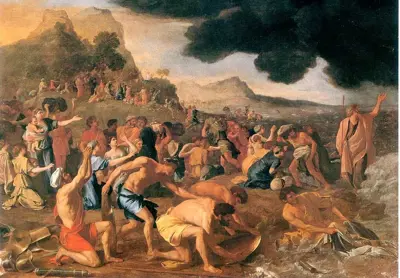
The Book of Exodus is the second book of the Torah and of the Old Testament. Starting with the deliverance of Moses by Pharaoh's daughter, it recounts the revelation at the Burning bush where he was called by Yahweh to deliver the Israelites from Egyptian slavery. After Pharaoh rejected his and Aaron's demands, according to the book, the Almighty inflicted ten Plagues on Egypt resulting in the Exodus. The Mosaic covenant was made at the biblical Mount Sinai, and subsequently the Tabernacle, with a "divine indwelling" of God with Israel.
