Moses Quotes
Thou shalt not let him go away empty. Thou shalt furnish him liberally out of thy flock, and out of thy floor, and out of thy wine-press: of that wherewith the Lord thy God hath blessed thee thou shalt give unto him.
The newly freed slave would have no practical chance of success in a capitalistic, competitive society unless he had the basic tools and property to earn a living and compete. This was mandated for the ancient Jews in the Law of Moses. This was not considered too seriously in Reconstruction after the Civil War, and much of the discrimination and racism might have been avoided if the freed slaves were all given some land as many were in general homesteading programs. These Blacks, and those that went to the industrial North where business owners provided them with the tools and resources in exchange for their labor, were generally the most successful.
Moses, c. 1200 BC, Ancient Hebrew Leader, Old Testament, Deuteronomy 15-13,14
Sourced by: Eigen's Political and Historical Quotations

Although slavery and indentured servitude existed amongst the Ancient Jews, the slaves had to be emancipated after 6 years. The slave owners had to give the emancipated slave a “nest egg” so that he/she could integrate into the community. The reason that this quotation is very important for Americans is twofold: First, many of the Northern states embodied this concept of a maximum term regarding indentured servitude (without the nest egg however). Second and most important is that the Southern slave owners and slavery apologists pointed to the Old Testament as a moral justification for slavery—ie God’s Chosen People had slaves under His law; so it cannot be immoral as abolitionists claim. However, hypocritically they used the Bible to justify their institution of slavery, but never followed God’s requirement of emancipation after 6 years, much less the nest egg concept.


Jennings had been purchased by Webster and served as his personal butler. As such, and technically a free Black, Jennings had the run of Washington including the Capitol. Webster had freed Jennings with the understanding that Jennings would work off his purchase price. About a year before Jennings had fully worked off his freedom price, he organized a slave escape of Washington house slave by arranging for a ship, the Pearl, to take them North. He wrote his letter to Webster and then went to the docks where the slaves boarded the Pearl. At the last minute, he left the ship and returned to the Webster home feeling that he had given his word and to leave at that time would be dishonorable. The slaves sailed, but were caught by a posse shortly. Most of the slaves were sold as field hands to the deep South, but the white ship’s master, Daniel Drayton, was tried for stealing property. He was defended by Horace Mann, and fined an amount he could not pay and went to jail. The Pearl escape received much notoriety as the escapees were all very “privileged” slaves. Two years later in the Compromise of 1850, selling slaves on the open market was banned in Washington DC. Millard Filmore pardoned Drayton after 4 years in jail. Jennings completed his promise of service and was never prosecuted for his organization of the escape.


Previous Sultans had developed a large army of Black Moors. Then there was a civil war in Morocco where the light skinned Moroccans fought against those of dark skin. The light skins won and the new Sultan ordered the remnants of the Black soldiers with their families to Larache where he surrounded them by Arabs and simply gave the Blacks to the light skinned Arabs as slaves.


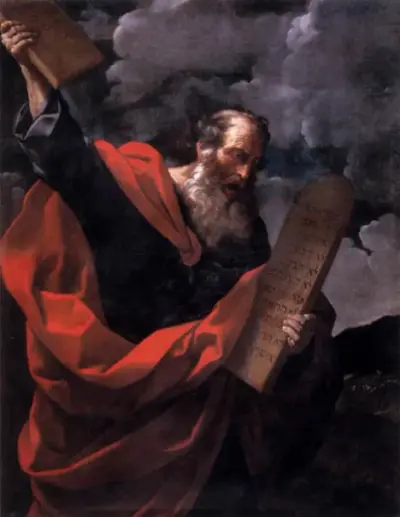
Moses (/ˈmoʊzɪz, -zɪs/), also known as Moshe Rabbenu (Hebrew: מֹשֶׁה רַבֵּנוּ lit. "Moshe our Teacher"), is the most important prophet in Judaism, and an important prophet in Islam, Christianity, the Baháʼí Faith, and a number of other Abrahamic religions. In the biblical and quranic narrative, he was the leader of the Israelites and lawgiver to whom the authorship, or "acquisition from heaven", of the Torah (the first five books of the Bible) is attributed.
