James Kent Quotes
It is sometimes a very grave question when and how far one nation has a right to assist the subjects of another, who have revolted, and implored that assistance. It is said (a) that assistance may be afforded, consistently with the law of nations, in extreme cases, as when rulers have violated the principles of the social compact, and given just cause to their subjects to consider themselves discharged from their allegiance
The highest court in New York.
James Kent, 1763-1847, Chief Justice of the New York State Court of Appeals Chancellor of New York State, Lectures in Law, Of The Rights And Duties Of Nations In A State Of Peace
Sourced by: Eigen's Political and Historical Quotations


Levy had gone to Bengasi—the center of the revolution—and returned to report to the French President. Levy had supported the President’s political opponent in the previous election. None the less, the President listened to Levy and credits him with the arguments that brought France to take the lead in supporting the rebellion.

He had been exiled to the United States.


The possibility of intervention in the affairs of other counties even if there is no U. S. national interest involved, was not new when the George W. Bush administration sent troops to Somalia and Bill Clinton bombed Serbia. There were appeals made “to our sympathies” and there were serious atrocities. But these modern Presidents were just following the policy clearly stated by Theodore Roosevelt in 1904.


Dulles lied to Congress. The CIA at the time was supplying planes and American pilots in support of an anti-Sukarno Government faction that was in armed revolt. It is not clear whether or not Dulles knew the truth when he had so testified.


After the World War I armistice there were 7,000 American troops remaining in Russian Siberia to the chagrin of the Secretary of War who wanted them removed. One reason given for their presence was to "protect our relief efforts there:"


Two years later, In August 1990, Iraq invaded and conquered Kuwait. This quotation was used in the 1990 Iraq crisis by President George W. Bush in his television speech to the Iraqi people.


The highest court in New York.
The highest court in New York. This was the generally accepted view of international law until WWII when atrocities and crimes against humanity were coped with. Also, at the time of this writing America was a small emerging state and not one of the great powers. Hence the prohibition of even commenting on the internal affairs of another nation was important to us. Now that America is a superpower, and society is more concerned with human rights, the point of view has changed.


Despite the fact that there were no formal political polls at the time, public opinion was very influential in curtailing what might be a tendency to use of the American military. Starting with the Cold War later, Presidents tended to use American military force regardless of public opinion or would exaggerate or lie (Vietnam and Iraq wars for example) to temporally gain some public support.
England in this quotation claims the right to interfere in the internal affairs of another nation if there is mismanagement or crises AND her national interests are affected.
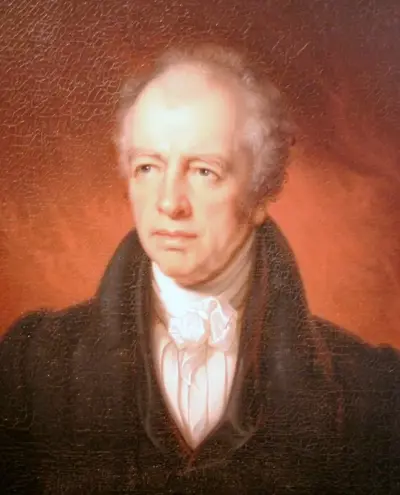
James Kent was an American jurist and legal scholar. He was the author of Commentaries on American Law.
