Yousef Saanei Quotes
It is self-evident in Islam that it is prohibited to have nuclear bombs. It is eternal law, because the basic function of these weapons is to kill innocent people. This cannot be reversed … You cannot deliberately kill innocent people.
This quotation demonstrates that even in the Islamic Fundamentalist Theocracy, not all the religious leaders are extremists and anti-human rights. However, Saanei is no longer in the top level of the Iranian government and more extreme fundamentalists have control of the government. But Iran is by no means monolithic.
Yousef Saanei, Grand Ayatollah & First Head of the Guardian Council of Iran, Quoted in "Nuclear weapons unholy, Iran says" SFGate, October 31, 2003
Sourced by: Eigen's Political and Historical Quotations

The enriched nuclear fuel could be used to operationalize a nuclear bomb. Iran had a history of using illegal poison gas in the Iraq-Iran War (Both sides used chemical weapons.) Iran had a history of aiding terrorist organizations. And Iran is the only nation belonging to the UN and sighing its charter in modern history that has threatened to destroy another nation via their President whose threats had not been retracted. Iran also is a Shiite Muslim nation and is at odds with the Sunni Muslim countries of the Middle East and if the Iraqis developed a nuclear bomb, there would be a Middle Eastern nuclear arms race. If Iraq would not cease its development program under pressure from other nations, a military attack was the other option. All were indeed ugly.

While not all Islamic Religious legal authorities agree any more than Christian or Jewish religious experts do, this quotation is often used to illustrate that the militant Muslim fundamentalists would not only use a nuclear or other kind of weapon if they could get and deliver one, but that some actually think that would be a moral act. He gives no source for his 10 million estimate and most observers think the number wildly exaggerated, And most of the weapons in the world that end up killing people are small arms, made mostly by China, Russia and other nations providing more than the United States. But in politics, and especially in the middle East, perception is reality. See {585931}.
This statement was dramatically notable because he is one of the few Muslim clerics to come out unequivocally against the 9-11 attack.

Fermi was the scientist who organized and planned the first controlled nuclear chain reaction as a part of the Manhattan Project and was one of the major scientific advisors to the Atomic Energy Commission until he, Oppenheimer, and several other scientists opposed the development of the Super (the name Edward Teller had given to the proposed hydrogen bomb). The scientists knew that we had and could make enough atomic bombs to destroy any nation and to make it doable with just a few bombs as opposed to many they saw as of little military
value. They further expected that the Russians and some others would be forced to keep up with us in an arms race and that the bomb would never be able to be used without retaliation in kind and the destruction of most of America. The politicians and military did not really believe that the Russians had the scientific capability to develop hydrogen weapons and some thought if we had them and no one else did, we could dictate a “pax Americana” to the world. Others feared that Russia or some other country would develop a hydrogen weapon and then dictate to us. We did have a monopoly on the Super for a few years and America never dictated to the rest of the world. When other countries developed the weapons, we entered the era of Mutually Assured Destruction (MAD).


The Iranian religious theocrat of Iran sees the issue as one where the United States is trying to keep nuclear technology from Iran and other Islamic countries. He seems to discount his own often uttered calls for “death to America” and the statements of intended war with the United States by the leading military officer of Iran. See {624408}.


This is one of the earliest uses of the phrase “weapons of mass destruction.” Panneloek quoted it in 1948, so it was used by Urey before then.

This prediction was sadly terribly accurate. Nuclear terrorism is a realistic threat at the millennium. Pannekoek was one of the first to predict it.

It is with this certainty that the Vice President led the effort to invade Iraq in a preemptory war. After the invasion it was discovered that Iraq did not have any nuclear weapons or any other WMDs. Further, Iraq had no WMD development program of any kind. The rationale for the Iraq War was nill.

The only reason this quotation became known is that in 2010, Wikileaks got hold of tens of thousands of secret U. S. State Department diplomatic cables and released it on the Internet. The major Muslim leaders of the Middle East, privately urged the United States to attack Iran to prevent them from developing a nuclear bomb. At the same time, they publicly expressed their love and respect for their fellow Muslims. In actuality the Persians are ethnically very different from the Arabs and have always seen Persia as the natural leader of the Middle East if not more of the world. The Persians have always looked down on the Arabs and the Arabs have resented it. Further, most Iranian Muslims are Shiites and most Arabs Sunni. Fundamentally, they each believe that the other is a true heretic to Islam.

This declaration, drafted by Russell and Einstein two days before Einstein’s death was signed by a number of other prominent scientists.


This quotation represents a colossal failure of politicians to understand science and the way that it works. They assumed that the processes and methods were secrets that if kept secret, would prevent others from constructing an atomic bomb. The reality was that the most important “secrets” had emanated from Einstein’s Theory of Relativity and other published scientific papers. So any competent physicist knew immediately how the bomb worked. A triggering mechanism would need to be developed but that was just a complicated engineering project. The largest barrier was the supply of enough radioactive material with sufficient purity. That then (as today) took a lot of money and some time. But after the initial bomb, the secrets might speed things up but were not necessary. That is why the French and the Russians quickly developed their bombs, and why it did not take the Israelis long once the had decided to invest the resources. China, India and Pakistan did not need the secrets either when much later, they decided to develop nuclear weapons. With the atomic bomb, spying and obtaining secrets shorten the required time and reduce the cost, but are not necessary. This is why nuclear proliferation is so hard to stop.


Bethe was the head of the Theoretical Division of Los Alamos and was one of the Senior Scientists who developed the Atomic Bomb. At the time, he was very enthusiastic about scientists helping to stop the Germans and Japanese from winning WWII. He had been a refugee from Nazi Germany and became a great American Patriot. However, when there were tens of thousands of nuclear weapons—enough to destroy the entire population centers of the earth several times over, he urged a reduction and finally made this plea the year before he died. See {628438} for a recent expression of the principle of individual scientist’s responsibility.

At the time, surprising to most people now, the use of the atomic bomb was not an issue of controversy at all. There were no Congressman who questioned it, no newspapers which editorialized against the use of the bomb. There were not even any other counties which protested its use. The blessing of ending the war, even at the cost of less than 200,000 deaths seemed a clearly desirable tradeoff when compared with the many millions of deaths that would have occurred had the bomb not been used. As an example, the conventional bombing of Tokyo before the nuclear weapons were used killed as many Japanese as either Hiroshima or Nagasaki.

Joint Chiefs of Staff Chairman Martin Dempsey recently described the Iranian leadership as “rational actors.” Lewis, the Western World’s greatest Islamic Historian, was advising regarding the Iranian effort to enrich uranium. The Iranians if they enriched enough could develop a nuclear weapon. Historically, nuclear powers have always been deterred by using them as the retaliation would wipe out most of their country and people. This Mutually Assured Destruction (MAD) Lewis felt might not inhibit the Iranian leadership who have glorified suicide bombers and have sent tens of thousands of young people to their deaths (and immediately to Paradise) leading Iranian troops through Iraqi minefields in the Iran Iraq War. The national security question was should Iran be allowed to get a nuclear weapon?


The Scientific Project that developed the Atomic Bomb. The Scientific Project that developed the Atomic Bomb


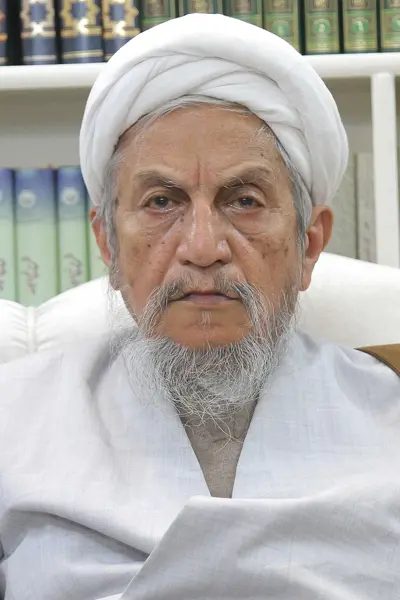
Grand Ayatollah Yousef Saanei was an Iranian Twelver Shi'a Marja' and politician, a member of the Islamic Republic of Iran's powerful Guardian Council from 1980 to 1983 and also Attorney-General of Iran from 1983 to 1985.
