Hans Albrecht Bethe Quotes
Today we are rightly in an era of disarmament and dismantlement of nuclear weapons. But in some countries nuclear weapons development still continues. Whether and when the various Nations of the World can agree to stop this is uncertain. But individual scientists can still influence this process by withholding their skills., Accordingly, I call on all scientists in all countries to cease and desist from work creating, developing, improving and manufacturing further nuclear weapons - and, for that matter, other weapons of potential mass destruction such as chemical and biological weapons..
Bethe was the head of the Theoretical Division of Los Alamos and was one of the Senior Scientists who developed the Atomic Bomb. At the time, he was very enthusiastic about scientists helping to stop the Germans and Japanese from winning WWII. He had been a refugee from Nazi Germany and became a great American Patriot. However, when there were tens of thousands of nuclear weapons—enough to destroy the entire population centers of the earth several times over, he urged a reduction and finally made this plea the year before he died. See {628438} for a recent expression of the principle of individual scientist’s responsibility.
Hans Albrecht Bethe, 1906-2005, Nuclear Physicist, Call to Scientists on the 50th Anniversary of Hiroshima, 2004
Sourced by: Eigen's Political and Historical Quotations

See Hans Bethe {628530} for a practical implication of this principle.


Many politicians and military thinkers disagree with Kraus. America, England, France, Russia, and Israel have all demonstrated over the years that even with great provocation they would not resort to nuclear retaliation nor have they ever threatened use of WMDs. Iran, in contrast, has repeatedly stated as one of their major objective, the total destruction of another UN member state—Israel. Further, Iran has never possessed a weapon that it did not use shortly after possession, including poison gas. Therefore America and the United Nations have all determined that a double standard is necessary with Iran.


This was an extremely prescient statement written even before the first atomic bomb had been used in the war. When the scientists and politicians realized the implications of their success on the Manhattan Project developing the first atomic bomb, they were already meeting to come up with arms controls. It is useful to consider Dr. Franck’s last sentence in the light of the impeding done by Saddam Hussein.

This was his last publication. He died of a heart attack as the magazine was being printed. Since this was written one other possible use of nuclear weapons has been suggested—namely, retaliation for a biological attack. From a policy point of view, maintaining an arsenal of biological weapons for retaliatory purposes is dangerous and use for retaliation of biological weapons is not very controllable and arguably less humane than a nuclear weapon. His point however still holds. We have to have a national defense policy against many threats and we have to have defense policies that handle all these without nuclear tactics is insufficient to handle any of the threats without causing more problems and we have other weapons and techniques that are just as, if not more, effective. They and systems under development have the major role in our current defense policy.


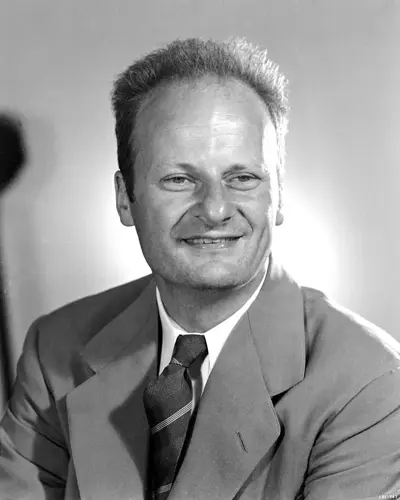
- Born: July 2, 1906
- Died: March 6, 2005
- Nationality: German, American
- Profession:
Hans Albrecht Bethe was a German-American nuclear physicist who made important contributions to astrophysics, quantum electrodynamics, and solid-state physics, and who won the 1967 Nobel Prize in Physics for his work on the theory of stellar nucleosynthesis. For most of his career, Bethe was a professor at Cornell University.
