J. R. R. Tolkien Quotes
The news today about 'Atomic bombs' is so horrifying one is stunned. The utter folly of these lunatic physicists to consent to do such work for war-purposes: calmly plotting the destruction of the world! Such explosives in men's hands, while their moral and intellectual status is declining, is about as useful as giving out firearms to all inmates of a gaol and then saying that you hope 'this will ensure peace'. But one good thing may arise out of it, I suppose, if the write-ups are not overheated: Japan ought to cave in.
J. R. R. Tolkein, 1892-1973, British Educator and Novelist, Letter to his son Christopher Tolkien, August 9, 1945
Sourced by: Eigen's Political and Historical Quotations

This prediction was sadly terribly accurate. Nuclear terrorism is a realistic threat at the millennium. Pannekoek was one of the first to predict it.

This quotation represents a colossal failure of politicians to understand science and the way that it works. They assumed that the processes and methods were secrets that if kept secret, would prevent others from constructing an atomic bomb. The reality was that the most important “secrets” had emanated from Einstein’s Theory of Relativity and other published scientific papers. So any competent physicist knew immediately how the bomb worked. A triggering mechanism would need to be developed but that was just a complicated engineering project. The largest barrier was the supply of enough radioactive material with sufficient purity. That then (as today) took a lot of money and some time. But after the initial bomb, the secrets might speed things up but were not necessary. That is why the French and the Russians quickly developed their bombs, and why it did not take the Israelis long once the had decided to invest the resources. China, India and Pakistan did not need the secrets either when much later, they decided to develop nuclear weapons. With the atomic bomb, spying and obtaining secrets shorten the required time and reduce the cost, but are not necessary. This is why nuclear proliferation is so hard to stop.

Fermi was the scientist who organized and planned the first controlled nuclear chain reaction as a part of the Manhattan Project and was one of the major scientific advisors to the Atomic Energy Commission until he, Oppenheimer, and several other scientists opposed the development of the Super (the name Edward Teller had given to the proposed hydrogen bomb). The scientists knew that we had and could make enough atomic bombs to destroy any nation and to make it doable with just a few bombs as opposed to many they saw as of little military
value. They further expected that the Russians and some others would be forced to keep up with us in an arms race and that the bomb would never be able to be used without retaliation in kind and the destruction of most of America. The politicians and military did not really believe that the Russians had the scientific capability to develop hydrogen weapons and some thought if we had them and no one else did, we could dictate a “pax Americana” to the world. Others feared that Russia or some other country would develop a hydrogen weapon and then dictate to us. We did have a monopoly on the Super for a few years and America never dictated to the rest of the world. When other countries developed the weapons, we entered the era of Mutually Assured Destruction (MAD).


The background of the statement was Iraq and Saddam Hussein.

Truman had been briefed on the number of Japanese who committed suicide rather than surrender—including civilians—in Saipan, Okinawa, Iwo Jima, and other locations where United States troops had invaded. He and his experts agreed that the Japanese would not surrender unless there was a new dramatic factor that was outside the usual thinking—the atomic bomb. He was proved right about the warning. Not only did the Japanese ignore it, but they did not even surrender after the nuclear devastation at Hiroshima. It took a second bomb dropped on Nagasaki to motivate the surrender. So even a demonstration with all those Japanese casualties did not cause the surrender until it was repeated.


For a similar view from the eyes of an American, see Pearson {612242}.


Bethe was the head of the Theoretical Division of Los Alamos and was one of the Senior Scientists who developed the Atomic Bomb. At the time, he was very enthusiastic about scientists helping to stop the Germans and Japanese from winning WWII. He had been a refugee from Nazi Germany and became a great American Patriot. However, when there were tens of thousands of nuclear weapons—enough to destroy the entire population centers of the earth several times over, he urged a reduction and finally made this plea the year before he died. See {628438} for a recent expression of the principle of individual scientist’s responsibility.


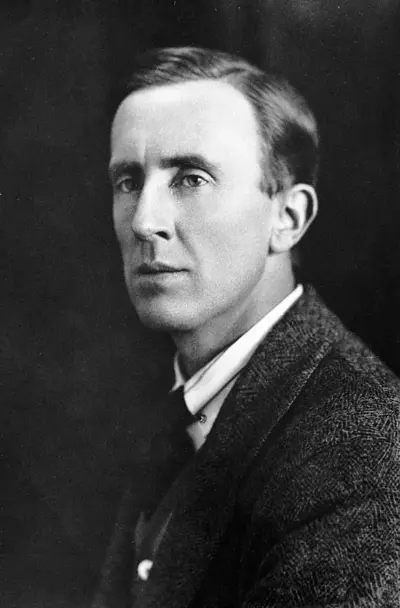
John Ronald Reuel Tolkien CBE FRSL was an English writer, poet, philologist, and academic, best known as the author of the high fantasy works The Hobbit and The Lord of the Rings.
