Jeremiah O'Donovan Rossa Quotes
It is in that English Parliament the chains for Ireland are forged
He had been exiled to the United States.
Jeremiah O'Donovan Rossa, 1831-1915, Irish Revolutionist, Founder, the Phoenix National and Literary Society, Editor, American Edition of United Irishmen "Rossa's Recollections 1838 to 1898: Memoirs of an Irish Revolutionary
Sourced by: Eigen's Political and Historical Quotations

At this point in the convoluted history of Irish-English politics, the majority of the Irish upper class and members of Parliament were large landholders whose estates had been accumulated and legalized under English

The Chief Secretary, Lord Castleregh, had put forward a resolution to bring about the unification of Great Britain and Ireland under the single British Parliament at Westminster. He and his allies had bribed a number of the Irish MPs to support the union. With Union some Irish MPs would then be able to win seats representing Ireland in the British Parliament. Although Grattan and most of the Orangemen opposed the Union, 4 months later, the bill passed comfortably. Ironically, Grattan was one of the Irish MPs whose popularity won a seat in the unified British Parliament.

Although the Irish members of Parliament were never sufficient to control Parliament on an “Irish question” pitting Irish against English, they were at times in sufficient numbers to hold the balance of power between English factions, thus “controlling England.”

Browne, an Englishman by birth, was the instrument of the Protestant Reformation in Ireland.


Executed by the English for his part in the Easter Uprising.
English law required equal citizenship for Blacks. However, the Affrikaners—white settlers from Holland were totally opposed. It turned out to be impossible for the English to impose their law upon all of South Africa.


Ministers refers to the Government Ministers, not to clergy.

He was addressing the Conservatives of Ulster, the Northern Ireland province that was the center of the Orangemen movement of Irish Protestants who were fighting to retain 'Protestant Ascendency' -- which was the social, political and cultural domination of the Protestants (the minority) over the Catholics (the majority). This was best achieved by keeping Ireland a part of Great Britain as opposed to having Ireland as a separate, independent country.


The Catholic majority was politically dominated by the Protestant minority in Ireland and the English Parliament generally sided with and supported the Protestants. O’Connell was open to Ireland being a part of the British Empire if it was the majority Catholic Ireland that was a part of the Empire.

The violent IRA logic had always been a little tortured. At the time, the claim was that the British were not wanted in Ireland but were there only by force of arms. However, the British administration of Ireland at the time was not forceful or violent at all. Few others had the freedom and democracy of Ireland as a part of Great Britain. De Valera’s logic was that if the British in Ireland were subjected to violent, terrorist attacks, they would respond with force of arms, and thus show that they held Ireland by force. Most of the Catholics of Ireland preferred independence while most of the Protestants preferred the relationship with England.


See {641497} for a quote from the Grenville speech. Fox, a conservative on most issues was an absolute radical on the issue of America. To aggravate the hawks in parliament, he used to dress in the colors of George Washington’s uniform to show his support once the war broke out.


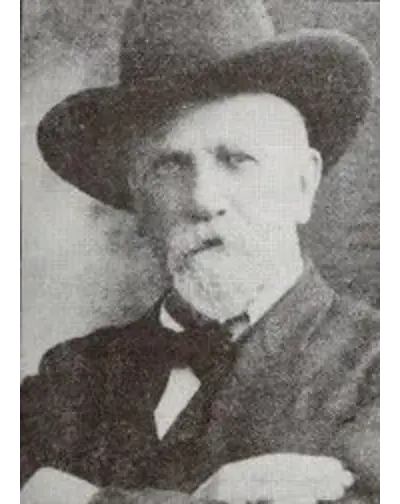
Jeremiah O'Donovan Rossa was an Irish Fenian leader and member of the Irish Republican Brotherhood.
