Jawaharlal Nehru Quotes
I am the last Englishman to rule in India.


As early as 1933, 14 years before Indian independence, there was a movement for a separate Muslim nation within India. Ironically, Hindu India was never a nation in any sense of the word, but was a series of independent principalities much like Italy before its unification. However, with the Muslim conquest of the various Indian states, there was a central authority, ruler, and nation for the first time. Later the Muslims had to argue that India was not a country when it was they who had made it such. When the Muslim Emperors were in power, they argued that India was one country under their authority. But when they lost power, the Muslims argued the other side of the issue.
The Partition was accompanied by over 2 million murdered Indians as India was divided into a smaller India with almost all the Hindus and Sikhs and a slight majority of the Muslims and Pakistan with all Muslims who made that choice. Pakistan has been trying to de stabilize the area ever since to gain control of more land and became a theocracy and military dictatorship—sometimes de facto and sometimes de juro.


Churchill, out of power at that time, was outraged that the Labour government was about to grant India self-government and independence removing half of the British Empire which he revered. His passion for maintaining the empire was so extreme that it affected his usual great powers of political analysis and prediction. The Congress Party Leaders led India to become the largest democracy the world had ever known, and leaders like Nehru and Gandhi became almost as famous and remembered as was Churchill himself.

Even into the 21st century, the problem was not solved and Muslims from Pakistan continue their futile but tragic terrorist tactics to try and acquire more territory from India." 1st Earl Mountbatten of Burma


That is exactly what happened. However it would not happen until after the Second World War.


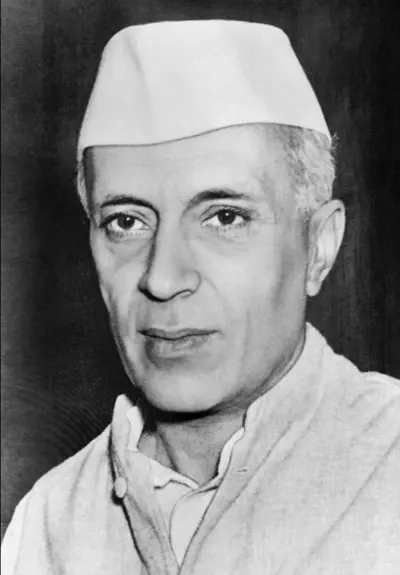
Jawaharlal Nehru was an Indian independence activist and, subsequently, the first Prime Minister of India, as well as a central figure in Indian politics both before and after independence. He emerged as an eminent leader of the Indian independence movement, serving India as Prime Minister from its establishment in 1947 as an independent nation, until his death in 1964. He was also known as Pandit Nehru due to his roots with the Kashmiri Pandit community, while Indian children knew him better as Chacha Nehru (Hindi: Uncle Nehru).
