Arundhati Roy Quotes
In a country like India, the British were only able to rule the country because it had completely co-opted the elite of the country, who did their work for them.
Roy, Arundhati. The Shape of the Beast: Conversations with Arundhati Roy. Penguin Books, 2008, p. 64.


One of the reasons that Jefferson and others were so anxious to expand the territory of the United States was that Britain had operated with the policy that curtailed and limited the population growth of the American colonies and the resentment of this policy led to growth of America and the Westward expansion.
As early as 1933, 14 years before Indian independence, there was a movement for a separate Muslim nation within India. Ironically, Hindu India was never a nation in any sense of the word, but was a series of independent principalities much like Italy before its unification. However, with the Muslim conquest of the various Indian states, there was a central authority, ruler, and nation for the first time. Later the Muslims had to argue that India was not a country when it was they who had made it such. When the Muslim Emperors were in power, they argued that India was one country under their authority. But when they lost power, the Muslims argued the other side of the issue.
In 1942 it was clear that India would be given its independence soon. There were a number of sticky problems in doing so. One was the fact that when the British came to India, all the states were ruled by Maharajas (Princes, Kings, etc.). The British signed treaties with almost all of them guaranteeing to protect and preserve their local powers in exchange for acceding to British Rule of the national government. But when it came time for independence, democracy was the mode—even in England. The Maharajas insisted that the British leave them with their control of their states as they had agreed, as opposed to creating democratic government at the state level. In the final analysis, the Maharajas lost all their governmental functions and privileges but were able to retain much of their wealth.


This quotation is an excellent example of the early, militant Gandhi. It is typical of militant theocracies of the Islamic world today.

Taft was making his first appearance as the newly appointed Governor General of the Philippines. Prior, the country had been administered by General Arthur MacArthur, father of General Douglas MacArthur, and some military officers and a few civilians, and the results had been quite poor—not unlike the administration of Iraq after the Iraq War at the beginning of the 21st century. However, unlike the Iraq situation, Taft admitted our failings and explained them, as shown in this quotation. He learned fast and had good instincts and developed a cadre of excellent administrators who got along very well with the people and did a good job.


Bismarck was opposed to any German colonial adventures but they were very popular with the electorate. Eventually he changed his policy and Germany became heavily engaged in Africa and elsewhere. The actual German word used by the Prince was “schwindel” whose connotation implies more of a deliberate deception.

The “We” to which he was referring were the British officials and civil servants who governed all of India as a colony of the British Empire.
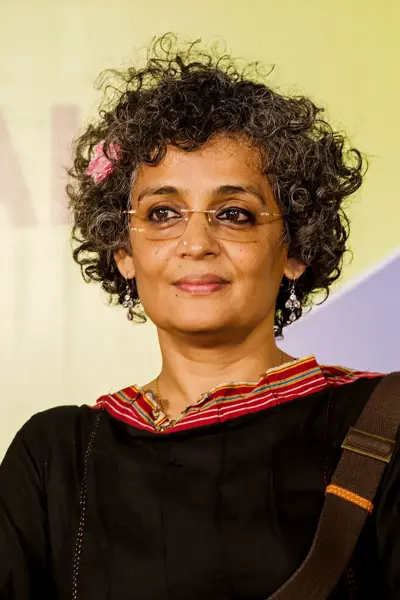
Suzanna Arundhati Roy is an Indian author best known for her novel The God of Small Things (1997), which won the Man Booker Prize for Fiction in 1997 and became the best-selling book by a non-expatriate Indian author. She is also a political activist involved in human rights and environmental causes.
