Margaret MacMillan Quotes
I first read the 'Raj Quartet' in the early 1970s, when Paul Scott's decision to set his novels in the dying days of the British Raj in India seemed an eccentric choice, almost as though he did not want readers. The British were tired of their imperial past.
MacMillan, Margaret. Women of the Raj: The Mothers, Wives, and Daughters of the British Empire in India. Random House, 2007.


The Partition was accompanied by over 2 million murdered Indians as India was divided into a smaller India with almost all the Hindus and Sikhs and a slight majority of the Muslims and Pakistan with all Muslims who made that choice. Pakistan has been trying to de stabilize the area ever since to gain control of more land and became a theocracy and military dictatorship—sometimes de facto and sometimes de juro.

The chance was the fact that war—the War of 1812—had been declared between Britain and America. Tecumseh allied himself with General Isaac Brock, the British Commander of the Western Forces. Tecumseh himself was put in charge of all Indian forces and given the rank of a British Brigadier General. However, Brock was killed shortly thereafter, and his replacement, General Procter, was not as skilled at working with Indian Allies and the British-Indian alliance was defeated bringing to an end the notion of “one great Indian nation.”


Even into the 21st century, the problem was not solved and Muslims from Pakistan continue their futile but tragic terrorist tactics to try and acquire more territory from India." 1st Earl Mountbatten of Burma

As early as 1933, 14 years before Indian independence, there was a movement for a separate Muslim nation within India. Ironically, Hindu India was never a nation in any sense of the word, but was a series of independent principalities much like Italy before its unification. However, with the Muslim conquest of the various Indian states, there was a central authority, ruler, and nation for the first time. Later the Muslims had to argue that India was not a country when it was they who had made it such. When the Muslim Emperors were in power, they argued that India was one country under their authority. But when they lost power, the Muslims argued the other side of the issue.
The Sepoys were Indian natives serving as enlisted men in the British Army in India. Napier had been the Commander of the British Forces in India and resigned over a dispute with the government. This quotation came from his negative report. Not long after he wrote this, the “Sepoy Rebellion” in 1857 almost destroyed English rule in India.

That is exactly what happened. However it would not happen until after the Second World War.
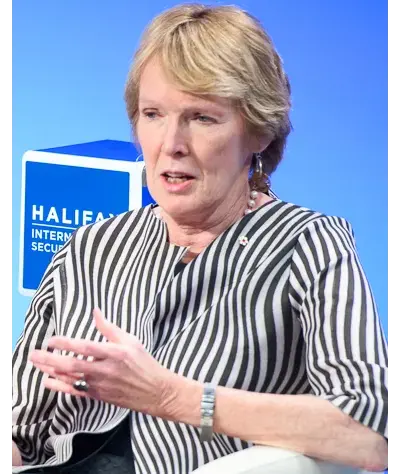
Margaret Olwen MacMillan CC CH is a Canadian historian and professor at the University of Oxford. She is former provost of Trinity College, Toronto, and professor of history at the University of Toronto and previously at Ryerson University. MacMillan is an expert on history and international relations.
