Kenjiro Den Quotes
It is eminently proper that we also grant them opportunities of education not inferior to those available to our own children; that we encourage them to develop; that we foster men of genius in all walks of life, thereby increasing the resources of our country. And it is with this in view that I have made it possible for Formosans qualified in the Japanese language to enter schools for Japanese children. Excellent results have already been obtained, with incalculably good effect upon our policy of assimilation.
Den was a liberal reformer. There were many liberal politicians in Japan until the right wing militarists took over. Most Japanese were extremely racist and wanted education to be segregated, not unlike the American South at the time. Den’s action described in this quotation was earthshaking to many Japanese. Integration of the schools was to them bad enough, but assimilating Chinese into the Japanese society was much worse.
Kenjiro Den, 1855–1930, Japanese Governor-General of Taiwan, Minister of Justice, Minister of Communications, & Minister of Agriculture and Commerce, Statement made while Governor-General of Taiwan
Sourced by: Eigen's Political and Historical Quotations

This quotation illustrates that without political freedom, many people are dissatisfied even if their standard of living has been increased by an occupying colonial power.
Formosa was invaded and occupied by Japanese troops and made a Japanese Colony.


The “company actially administered the Government of Great Britain in India.


The Japanese Government was in the control of ardent militarists intent on expanding the Japanese empire. They invaded Manchuria and had designs on China. The League of Nations was very weak, in large part because the United States had not joined when the Senate refused to ratify the treaty. So peace or war In Asia depended on the fascist, military clique that ruled Japan.

He was Governor-General of Korea when he made this statement. Most Japanese had nothing but disdain for Koreans and most other ethnicities.


He had concluded that Spain, who then ruled the Philippines, was incompetent, cruel and immoral in its rule, but that the Filipinos were not educated or sophisticated enough to rule themselves. However, he felt that he had to protect our commercial interests in the islands and the region, and was worried that commercial interests of other countries would take over and control the area. Another reason that this is a very important quotation is that it indicates the anti-Catholic bias in America at the time. Note that the President stated that one objective was to “Christianize” them. However, Spain had been in the islands for over 300 years and most Filipinos were already Roman Catholic. However, Roman Catholics were then a much smaller proportion of the American population and many Protestants didn’t think Catholicism was a legitimate Christian Religion. When the majority of Americans thought of Christianizing other people, they thought of Protestant missionaries much like England. At the time there was very little criticism of the President for the “error” of stating that Filipinos should be Christianized when they were so already Spanish Colonial Policy and Practice was generally terrible and particularly so in the Philippines, See {629450}.


See {633119} for the basic provision of the Dawes Act.

This is only one of many anti-American and anti-Israeli and anti-Semitic passages in the text. It is typical of much of the Wahhabi literature which also supports jihad and violence. Much of the funding for the Wahabbi comes from the Saudi Arabian Government and members of the Saudi Royal Family. There is total censorship in Saudi Arabia and nothing gets preached or printed if the Saudi government wishes otherwise. However, most of the imams in Saudi Arabia are Wahhabi and are paid by the government. The Royal Family’s only fear of losing power is if the Islamic clerics claim that the government is not supportive of Islam. They spend much money to buy their lack of opposition to the monarchy. The government position however is contrary to these hate-filled textbooks.
He was Governor-General of Korea when he made this statement.

Japan’s militarism and aggressive tendencies were in evidence well before WWII.
American occupation of the Philippines produced great leaps forward in terms of education and political awareness and rights. However, there was not a large improvement on the average standard of living. Economic development lagged. It is interesting to contrast this with the Japanese view of colonialism at the time. See {638280}. For the Japanese, the major objective was economic development, after that perhaps education, and least important were political rights. We were just the opposite in priorities and accomplishments.


The Freedmen’s Bureau was an institution established after the Civil War to provide assistance to the newly emancipated and free slaves. Every constructive step taken by the Bureau was opposed and obstructed by “unreconstructed” Southerners and some Northerners. They had very limited resources and there was little known technically about how to accomplish their mission. However, tens of thousands of individual new freed Negroes profited immensely and there were some systemic successes such as Du Bois describes in this quotation. There were also some failures he believed—See Quotation 643645.
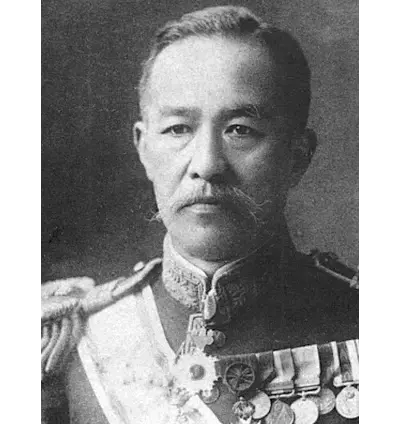
Baron Den Kenjirō was a Japanese politician and cabinet minister in the pre-war government of the Empire of Japan. He was also the 8th Japanese Governor-General of Taiwan from October 1919 to September 1923, and the first civilian to hold that position. Den was also a co-founder of Kaishinsha Motorcar Works, a predecessor to present-day Nissan and the original manufacturer of Datsun automobiles.
