Saito Makoto Quotes
For our [Japanese] own safety, we must govern this country [Korea]. We hope that in time the Koreans will realize that they need our assistance. They can do nothing by themselves.
He was Governor-General of Korea when he made this statement. Most Japanese had nothing but disdain for Koreans and most other ethnicities.
Saito Makoto, 1858–1936, Prime Minister of Japan, Japanese Governor-General of Korea, Naval Admiral & Minister of the Navy, Statement of the Japanese Colonial Policy for Korea, Quoted in Ralston Hayden, “Japan's New Policy in Korea and Formosa”, Foreign Affairs, March 1924
Sourced by: Eigen's Political and Historical Quotations

The Japanese have always been very race conscious seeing themselves as the racial pinnacle of Asian peoples and others as inferior. The peoples of Okinawa were not the racially pure Japanese and MacArthur turned out to be right that protection of Okinawan rights, prerogatives, and dignity was much less important than for ethnic Japanese. It would not be until the last decade of the 20th century that Japanese public opinion was seriously concerned about the Okinawans. Even then, Japan’s independence and dignity as a sovereign nation appeared more important than the rights and dignity of the native Okinawans.


‘Amalgamated’ was a euphemism for ‘being taken over by’. Ito was assassinated shortly thereafter by a Korean patriot who objected to Ito’s takeover of his country.


This quotation illustrates that without political freedom, many people are dissatisfied even if their standard of living has been increased by an occupying colonial power.

Alaska was then a territory and not yet a state. See {637486} for Eleanor Roosevelt’s then contemporaneous statement on statehood.


The Chief Secretary, Lord Castleregh, had put forward a resolution to bring about the unification of Great Britain and Ireland under the single British Parliament at Westminster. He and his allies had bribed a number of the Irish MPs to support the union. With Union some Irish MPs would then be able to win seats representing Ireland in the British Parliament. Although Grattan and most of the Orangemen opposed the Union, 4 months later, the bill passed comfortably. Ironically, Grattan was one of the Irish MPs whose popularity won a seat in the unified British Parliament.


Korea had been annexed and occupied by the Japanese in 1910. 33 Korean patriots signed the declaration and paid severely for their act against Japan. The Korean patriots were strongly influenced by American President Woodrow Wilson’s statements on the right of self determination.
The King was concerned because many of the English living in Ireland were “going native” and he also thought that if the Irish could become more civilized they could be assimilated instead of having to control them with expensive troops. To some extent this actually worked, especially in speaking English, but the entire law was very difficult to enforce. It did however, keep the Englishmen from departing from English dress, speech and household arrangements.

Den was a liberal reformer. There were many liberal politicians in Japan until the right wing militarists took over. Most Japanese were extremely racist and wanted education to be segregated, not unlike the American South at the time. Den’s action described in this quotation was earthshaking to many Japanese. Integration of the schools was to them bad enough, but assimilating Chinese into the Japanese society was much worse.


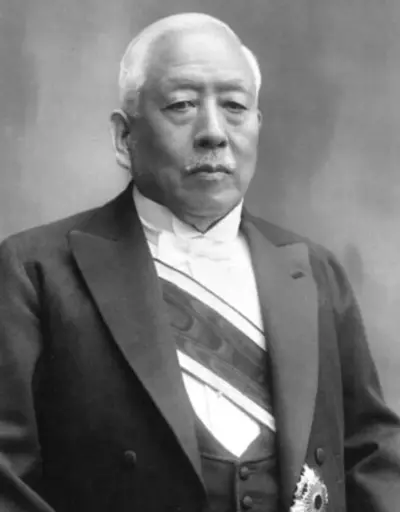
Viscount Saitō Makoto, GCB was a Japanese naval officer and politician. Upon distinguishing himself during his command of two cruisers in the First Sino-Japanese War, Saitō rose rapidly to the rank of rear admiral by 1900. He was promoted to vice admiral during the Russo-Japanese War in 1904. After serving as Minister of the Navy from 1906 to 1914, Saitō held the position of Governor-General of Korea from 1919 to 1927 and again from 1929 to 1931. When Inukai Tsuyoshi was assassinated in May 1932, he took his place as Prime Minister and served one term in office. Saitō returned to public service as Lord Keeper of the Privy Seal in February 1935 but was assassinated only a year later during the February 26 Incident.
