Zhang Zhidong Quotes
Unlike 30 years ago, people now admire the wealth of the West and lament the poverty of China; they stare awestruck at the power of the Western armies and scorn the cowardice of the Imperial troops; they enjoy the fairness and ease of the Customs and detest the fault-finding of China’s own tax collectors; they praise the orderly governance of the Western-Administered cities, and resent the harassment of our officials, big and small.
Zhang Zhidong, 1837-1909, Viceroy of China, Chinese Governor General of Hubei and Hunan, Reformist Viceroy of China, 1801
Sourced by: Eigen's Political and Historical Quotations


This is one of the great historical quotations. He was, in the 19th century, referring to the past 1000 years of Russian history. The quote has been used many times since then to describe various states and nations and over much shorter periods of time. China and modern North Korea are good examples.


Agree resigned from the CIA in protest to its political positions.


For almost a century this is an attack that conservative Republicans had made on Democrats. Yet the two greatest period of poverty, the Great Depression and the Great Recession occurred in Republican Administrations and recovery began under Democratic Presidents. The two great targets accused of wanting to spread the wealth around were Presidents Clinton and Obama In each case, the country was more affluent after 4 years of spreading the wealth, there were more jobs and average incomes were up—well better than when they took office from Republicans. There are two great theories of how wealth and prosperity is created. Conservatives argue that government should give money (or reduce tax burdens) and resources to the wealthy and they will invest it to create jobs and everyone will prosper. Liberals argue that the government should invest (spend money) in programs that strengthen the middle class and give them money or (reduce their tax burdens) and consumer spending which accounts for 70 percent of the economy will increase and the rich owners of the corporations will also make more money. Clearly both of these approaches seem to have worked at different times in American history; however, both of them have been failures at other times. (The George W. Bush and Jimmy Carter Administrations for example.) However, that is the political economic issue which must be decided by each American generation.
Pandita Indrani Rampersad. She is the first Hindu woman who ever became a pundit—a religious expert who guides Hindus. She is also a professor in the United States.

The International Finance Corporation (IFC), an organization supposedly devoted to financing poverty elimination had supported the building of a luxury 5-Star hotels in Ghana, Egypt and several other poor nations. The construction creates jobs as does the operation of the hotel, but critics complain that the impact on poverty is small compared to the size of the investment. The fancy hotels are too expensive for the local small businessmen and women to use in their commercial development. The elites and the AID givers and NGOs of course have better—and more expensive—accommodations.

Tibet and some other ethnic enclaves of China have been almost impervious to the general improvement in the standard of living that China accomplished at the end of the 20th century and beginning of the 21st. China is not the only nation to have this difficulty. Some would argue that America still has it with some of its Native American nations. The great challenge is trying to develop and modernize a culture that does not want to be modernized at the moment but still wants many of the benefits of modernization.
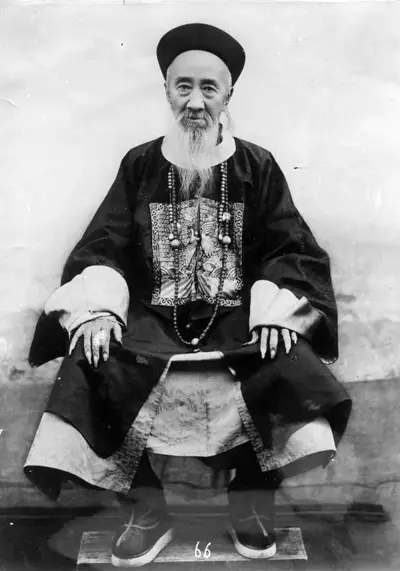
Zhang Zhidong (Chinese: 张之洞) was a Chinese official who lived during the late Qing dynasty. Along with Zeng Guofan, Li Hongzhang and Zuo Zongtang, Zhang Zhidong was one of the four most famous officials of the late Qing dynasty. Known for advocating controlled reform and modernization of Chinese troops, he served as the Governor of Shanxi Province and Viceroy of Huguang, Liangguang and Liangjiang, and also as a member of the Grand Council. He took a leading role in the abolition of the Imperial examination system in 1905. The Red Guards destroyed his tomb in 1966 during the Cultural Revolution. His remains were rediscovered in 2007 and reburied with honors.
