Saito Makoto Quotes
The economic development of the country must come first. Education and the raising of the standards of the people will follow. Afterwards political development may be possible.
He was Governor-General of Korea when he made this statement.
Saito Makoto, 1858–1936, Prime Minister of Japan, Japanese Governor-General of Korea, Naval Admiral & Minister of the Navy, Statement of the Japanese Colonial Policy for Korea, Quoted in Ralston Hayden, “Japan's New Policy in Korea and Formosa”, Foreign Affairs, March 1924
Sourced by: Eigen's Political and Historical Quotations

American occupation of the Philippines produced great leaps forward in terms of education and political awareness and rights. However, there was not a large improvement on the average standard of living. Economic development lagged. It is interesting to contrast this with the Japanese view of colonialism at the time. See {638280}. For the Japanese, the major objective was economic development, after that perhaps education, and least important were political rights. We were just the opposite in priorities and accomplishments.


The relationship of population increase economic growth is a critical one. If an underdeveloped country manages to have a 3% annual economic growth rate and also has a 3.2% population growth, at the end of the year, the average person is actually poorer than he was the previous year. South Korea, China, Thailand and India implemented successful population control and family planning programs before they were able to take advantage of economic development. To modernize, the country must be able to have a surplus of funds which can be invested in roads, schools, hospitals, and other facilities which can produce even more growth later. Too many new mouths to feed, clothe and care for can be a barrier to development even if the economy is reasonably good.


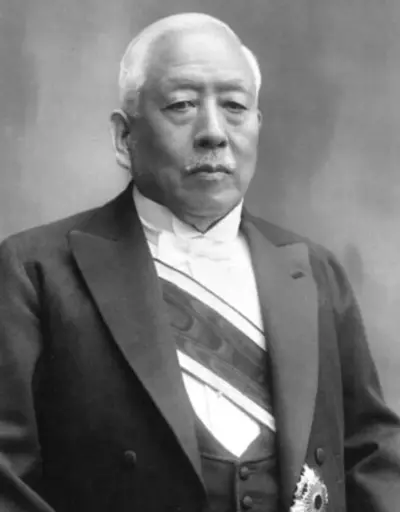
- Born: October 27, 1858
- Died: February 26, 1936
- Nationality:
- Profession:
Viscount Saitō Makoto, GCB was a Japanese naval officer and politician. Upon distinguishing himself during his command of two cruisers in the First Sino-Japanese War, Saitō rose rapidly to the rank of rear admiral by 1900. He was promoted to vice admiral during the Russo-Japanese War in 1904. After serving as Minister of the Navy from 1906 to 1914, Saitō held the position of Governor-General of Korea from 1919 to 1927 and again from 1929 to 1931. When Inukai Tsuyoshi was assassinated in May 1932, he took his place as Prime Minister and served one term in office. Saitō returned to public service as Lord Keeper of the Privy Seal in February 1935 but was assassinated only a year later during the February 26 Incident.
