Henry McNeal Turner Quotes
It is astonishing to see how little some of our would-be great and wise white men know about the Negro, his ability, his progress, his books, newspapers, churches, home tastes, etc.
Henry M. Turner, 1834-1915, Minister and Bishop, African Methodist Episcopal Church, Co-Founder, Georgia Republican Party, Vice President, American Colonization Society, Letter, October 19, 1891
Sourced by: Eigen's Political and Historical Quotations

The term came to be used by many New York Newspapers.


The president was commenting on a Donald Trump campaign statement that African American were in the worst shape in history when the reality was just the opposite


Charleston was in the Southern part of the state where most people supported slavery. Douglas made an unequivocal pitch for the racist vote {600060} and forced Lincoln to take a stand. Like many politicians today, Lincoln decided to give the audience what they wanted to hear. It is not clear whether or not he ever believed this statement or was just pandering in a political campaign. He had never said this in the Northern part of the state of before. Lincoln’s views on race changed and matured over the years, culminating in the Emancipation Proclamation. Lincoln lost the Senate seat to Douglas.

Bruce was the first, and through the 20th Century, and only Black Senator from Mississippi. He was the first Black Senator to serve a full term. Elected during reconstruction, he was the voted out of office when Blacks were prevented from voting. See {625745}.

This painting depicted a young black girl walking to school surrounded by 4 U. S. Marshalls protecting her from the crowd of white racists trying to prevent her from attending an elementary school under court order. The vicious race hatred that school integration revealed was the national problem that was then surfacing. The graphic is the illustration that appeared in Look with that name.

Many historians of higher education to not agree with Wilder’s overall generality. However, it was certainly the case that slavery was a major factor in generating the funds for some early universities in the North, but others were “hotbeds” of abolition from their very inception.
There is a significant argument as to whether of not race should be used to try and predict the variables that will likely produce crimes. Some social scientists argue that virtually everything correlates with race {633357} and therefore the predictions are meaningless. Here, Kurtz argues that if you do not use race, since it does correlate with so much, then you might as well not try and determine the predictive factors of crime. Reality lies in the center, use race as one of the statistical variables but do not use it for profiling potential criminals and potential suspects unless there is observable and not deduced or inferred evidence of race in the crime.

A Southern Republican congressman with a voting record that was against minority interest, for the first time in American, interrupted and insulted the President of the United States in the midst of an invited Presidential Address to Congress given by Barack Obama, calling him a liar. Carter, himself a Southerner, recognized the motivation.

In the early 20th century, Carver and Du Bois were the two most important Negro leaders in America. However, they disagreed over tactics. Carver tended to believe that if the Negro would be educated and trained for meaningful occupations, he would rise in the eyes of the whites and discrimination would diminish. Du Bois was more cynical as can be seen in this quotation as he looked back on history when he was 95 and close to death. He had the advantage at this time of seeing that Washington’s strategy had failed, but he opposed Washington on this from the beginning. Most whites preferred Washington’s view as whites were relived of immediate moral responsibility for racism and the burden was placed on Blacks to train, develop and display themselves as worthy. It was only when very large numbers of Blacks had done this and nothing much changed in terms of civil and economic rights, that it was clear that Washington’ view had been hopelessly naïve.
Many people erroneously attribute this quotation to Margaret Sanger, who had observed that the upper class women generally knew how to practice birth control and could obtain the devices that were available at the time while the poor and uneducated knew very little and not only did not have the money to obtain birth control devices, but the laws made it illegal so that no one dared to promote it. Du Bois was in many ways, a Black elitist and this quotation reflects that.


Nixon, in his second attempt to win the Presidency was told by a small group of Southern Republican politicians that his support was wavering in the South. They had already left the Democratic Party in reaction to the Passage of the 1964 Civil Rights Act. They were concerned because in order to try and capture some of the more liberal anti-war Democrats, Nixon had been making speeches advocating the vigerous enforcement of of civil rights and improving the lot of the Negro. But Nixon could not afford to lose his political base inb the south. Hence the promise which did not keep very long after he was elected President. Nixon was not a strong civil rights President, but he was totally without principles and had no political idiology he would sacrifice any of his political capital for. So once he was elected, he didn't want to offend the centerists whose support he needed for his legislatrive program so he did pay lip service to the prinicples of equality when he himself was anti-Black, andti-Semitic and prejudiced in many areas including against intelelctuals.

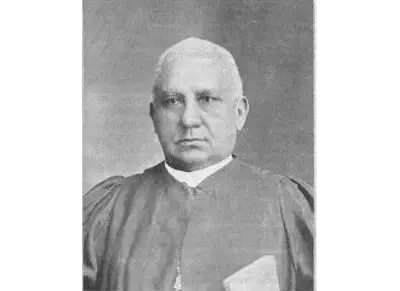
Henry McNeal Turner was an African-American minister, politician, and the 12th elected and consecrated bishop of the African Methodist Episcopal Church (AME). After the American Civil War, he was a pioneer in Georgia in planting new A.M.E. congregations among African Americans there. Born free in South Carolina, Turner learned to read and write and became a Methodist preacher. He joined the AME Church in St. Louis, Missouri, in 1858, where he became a minister. Founded by free blacks in Philadelphia, Pennsylvania in the early 19th century, the A.M.E. Church was the first independent black denomination in the United States. Later Turner had pastorates in Baltimore, Maryland, and Washington, DC.
