Samuel Adams Quotes
It is always dangerous to the liberties of the people to have an army stationed among them, over which they have no control ... The Militia is composed of free Citizens. There is therefore no danger of their making use of their Power to the destruction of their own Rights, or suffering others to invade them.
Adams, Samuel. The Writings of Samuel Adams. Edited by Harry Alonzo Cushing, vol. 3, G. P. Putnam's Sons, 1907, p. 251.

A state militia is necessary

The issue of whether the military has any rights per se in a democracy or is an institution established and controlled by the people is one that separates many countries today. In one philosophy—held by America and most industrial democracies—the military is completely subservient to and under the control of the people and their government. The other view held by many societies controlled by the military is that the military is a subset of the people with specific rights granted to it. In some countries the military can name representatives, can veto legislation and are considered a faction just like political parties. See China, Turkey, Argentina, and Indonesia for examples of the latter view.


Mao and other Chinese leaders molded the people into an Army to fight the invading Japanese in WWII after which they were attacked by Chiang Kai-shek’s Nationalists. In a remarkable trek of escape the Communists moved across China to escape the nationalists while the Red Army provided protection. Without the Red Army, the Communists would easily have been overrun then and after the Nationalists “escaped” to Taiwan they planned and threatened to invade the mainland. It was the Red Army that kept them at bay, and so the “People’s Army” has an emotional, historical and intellectual impact and role even in 21st Century China when there really are no enemies that would attack China.


Congress and most of the Founding Fathers were very distrustful of standing armies. They were aware that standing armies had taken over societies ever since ancient Rome and Julius Caesar.

Without a Constitution and a body of Federal Law, it was unclear during the American Revolution what a soldier should d if given an order that conflicted with the law. At the WWII Nuremberg War Crimes Trials, “obeying orders” was not a defense if the orders were illegal and against humanity. American law and military regulations require that a member of the armed forces refuse to obey an illegal order.

Not the current Daily News. He was very critical of the NY State Legislature changing the laws affecting wills and inheritance in order to benefit some special interest when there was a profound effect on millions of other people that had not been considered by the legislature, the majority of which had never even read the legislation, but were following party leader’s instructions or that of powerful committee chairmen.


These two states actually prohibited their legislatures from maintaining a standing army. Similar sentiments were in the constitutions or bill of rights of New Hampshire, Delaware, Maryland and Massachusetts but the option was left with the legislatures. A similar phrase appears in the Virginia Bill of Rights of 1776.
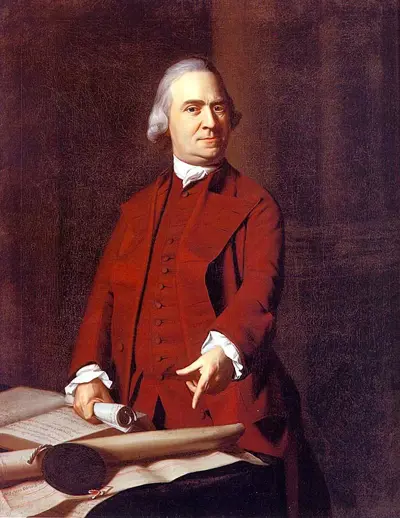
Samuel Adams was an American statesman, political philosopher, and one of the Founding Fathers of the United States. He was a politician in colonial Massachusetts, a leader of the movement that became the American Revolution, and one of the architects of the principles of American republicanism that shaped the political culture of the United States. He was a second cousin to his fellow Founding Father, President John Adams.
