Sheila Jackson Lee Quotes
It is a historical fact that President Bush pushed this nation into a war that had little to do with apprehending terrorists. We did not seek an impeachment of President Bush because, as an executive, he had his authority.
United States, Congress, House, Committee on the Judiciary. Hearing on the President's Constitutional Duty to Faithfully Execute the Laws. Government Printing Office, 3 Dec. 2013, p. 14.


The claims of the President that Hussein even had weapons of mass destruction were untrue. Eagleburger’s criteria for war would have been even more stringent as is clear in this quotation. Foreign affairs experienced members of the President’s own party tried to dissuade him from this disastrous plan of invading Iraq but were unable to.

Goldsmith headed the Justice Department Office of Legal Counsel—the office that makes legal opinions to guide the Federal Government’s conduct. Goldstein had been asked to render an opinion as to whether terrorists captured in the Iraq War were protected by the Geneva Conventions. The Justice Department staff had concluded that all Iraq civilians were covered including terrorists and insurgents. He was called to meeting at the White House with the President’s and Vice President’s counsels. When Goldsmith revealed the Justice Department conclusion, Addington grew agitated and made this response. The quotation provides insight into the operations of the George W. Bush White House and its relationship with the rest of the government.

President Bush claimed that he authorized the invasion because Iraq had developed and were about to deploy weapons of mass destruction. After the invasion, there were no such weapons ever found. Some believe Bush had acted on bad intelligence; others argued that Bush and the neocoms had wanted to invade Iraq for other reasons, and used the bad intelligence knowingly and actually suppressed intelligence that contradicted the hypotheis of weapons readiness.

The highest court in New York. Kent did not originate this concept. He was stating an age old principle of law: Posse vicinum impediri, ne in suo solo, sine alia causa suaque evidenti utilitate, munimentum nobis propinquum extruat, aut aliud quid faciat, unde justa formido periculi oriatur.


Podharetz was citing the Vietnam war. The two American occasions where the plausibility seemed to fade were the Vietnam War and The Irag war. Both Presidents Lyndon Baines Johnson and George W. Bush as Bismarck predicted, had much political trouble over the wars.


The George W. Bush Administration told Congress and the people of the world that Iraq had developed weapons of mass destruction and were about to deploy them. We invaded Iraq and it turned out that there were no WMD’s in Iraq. No one knows if the all in the administration honestly believed the intelligence, how many doubted it, and how many others suppressed contradictory evidence of which there was much. Some members of the administration wanted an invasion of Iraq for other reasons, personal and economic.

Actually, there are many in politics who to this day castigate Truman for his decision, but for Bloomberg’s generation and before, anyone would have pushed the button. And there are some who still fault Obama as technically, the U. S. had no right to violate Pakistani airspace and kill a resident of their state without any due process in the U. S. or Pakistan. Bloomberg would have easily pushed that button, but there are many officials who warned against it, and earlier Presidents—George W. Bush and Bill Clinton who did not authorize assassinations in foreign (allies) countries.

to send troops to Cuba The problem in Cuba was not even a crisis for America. But the precedent became the beginning of a huge change in the balance of power between the President and Congress. Together with his huge popularity, Roosevelt could do almost anything and have public support, but the war powers—the authority to send American troops into harm’s way—started their profound shift from requiring the President to ask Congress to declare war and the President acting unilaterally which had become common by the 21st century.


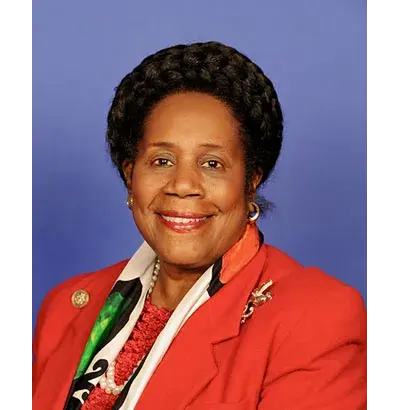
Sheila Jackson Lee is an American politician. She is currently the U.S. Representative for Texas's 18th congressional district, currently serving in her 14th term in the House, having served since 1995. The district includes most of central Houston. She is a member of the Democratic Party.
