David S. Addington Quotes
The president has already decided that terrorists do not receive Geneva Convention protections. You cannot question his decision.
Goldsmith headed the Justice Department Office of Legal Counsel—the office that makes legal opinions to guide the Federal Government’s conduct. Goldstein had been asked to render an opinion as to whether terrorists captured in the Iraq War were protected by the Geneva Conventions. The Justice Department staff had concluded that all Iraq civilians were covered including terrorists and insurgents. He was called to meeting at the White House with the President’s and Vice President’s counsels. When Goldsmith revealed the Justice Department conclusion, Addington grew agitated and made this response. The quotation provides insight into the operations of the George W. Bush White House and its relationship with the rest of the government.
David S. Addington, Legal Counsel and Chief of Staff to Vice President Dick Cheney, Statement to Justice Department Attorney Jack Goldsmith, October 2003
Sourced by: Eigen's Political and Historical Quotations

Several American soldiers have been court marshalled and found guilty of illegal torture for Warterboarding prisoners to induce them to provide information. Most experts agree that intelligence received this way is highly unreliable in that victims will say anything they think the torturer wants to hear to get the torture to stop.


The problem that was facing the nation in the early 21st century was when we captured a terrorist, was he a combatant or was he accused by a personal enemy, and had he been tortured to say he was a terrorist. The issue grew more complicated when terrorist suspects were brought to American territory at Guantanamo Bay, and the Courts have always held that a foreigner on American soil had a right to have access to the Federal Courts just as Citizens do. Complicating the situation more was the fact that a few American citizens had joined the terrorists and were they entitled to a civilian trial as all other Americans were.

The Justice Department had sent a memorandum arguing that since Al Qaeda and other terrorist groups did not represent any state, were not signatories to the Geneva Conventions, and commonly committed atrocities in violation of the Geneva Conventions, then there was no obligation for America, or any signatory nation, to protect captives of these terrorist organizations. See {589866} for a contrary position that was taken.


The Justice Department and the White House were arguing that the Geneva Conventions did not apply to terrorist groups. See {589865}.
Major Fleener had been assigned to defend accused terrorists who were being held at the military prison in Guantanamo, Cuba. For several years they were held without a hearing or trial. Then the U. S. Supreme Court ruled that they had to be given a hearing or trial. A Military tribunal was selected. The methods and procedures of these hearings came under much public world-wide criticism as they did not meet the normal legal standards of most countries. Surprisingly, one of the military officers made public statements criticizing the army and the trials.


There has always been some confusion in the case of the Wars in Afghanistan and Iraq. The Geneva and Hague conventions are very clear when prisoners are official members of an state’s armed force with uniforms, insignia and ranks. It is also clear with respect to civilians. But the combatants of the insurgent and terrorist forces fall in between, and international law is less clear. The George W. Bush administration at first took the position that the captured combatants were not captured soldiers and were therefore not entitled to the treatment due that status. But the military regulations made no distinction as to how prisoners in combat should be treated. It is a very gray area, except that in either case, torture is illegal under U. S. and under International law.

Abu Gharib was a prison in Iraq in which the officers in charge and the command structure failed to prevent a number of American soldiers from abusing and sexually and religiously humiliating Muslim prisoners. Photographs of the abuses traveled around the world and that particular unusual incident unfortunately fit the propaganda preconception of the Americans promoted by Islamic fundamentalist extremists. Tragically, as General McChrystal observed, Abu Gharib served as a recruiting tool for the terrorists.

Actually, there are many in politics who to this day castigate Truman for his decision, but for Bloomberg’s generation and before, anyone would have pushed the button. And there are some who still fault Obama as technically, the U. S. had no right to violate Pakistani airspace and kill a resident of their state without any due process in the U. S. or Pakistan. Bloomberg would have easily pushed that button, but there are many officials who warned against it, and earlier Presidents—George W. Bush and Bill Clinton who did not authorize assassinations in foreign (allies) countries.


The President and Vice President wanted places to interrogate suspected terrorists where they did not have to obey American law, where the press could be kept away from the prisoners, and there would be no way that a prisoner could get the assistance of attorneys and American Judges could not have any jurisdiction. A number of the prisoners had been picked up by mistake, or were accused by people who had scores to settle, and if the CIA had made a mistake, the public could not find out. Further, they wanted to torture certain prisoners and wanted places where they could use their “enhanced interrogation”—see {637536}--without the public finding out.
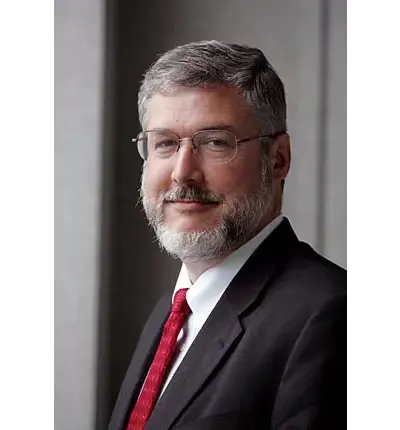
David Spears Addington is an American lawyer who was legal counsel (2001–2005) and Chief of Staff (2005–2009) to Vice President Dick Cheney. He was the vice president of domestic and economic policy studies at The Heritage Foundation from 2010 to 2016.
