John Yoo Quotes
It is important to recognize the differences between the war in Iraq and the war on terrorism. The treatment of those detained at Abu Ghraib is governed by the Geneva Conventions, which have been signed by both the U.S. and Iraq.
Yoo, John. "Terrorists Have No Geneva Rights." The Wall Street Journal, Dow Jones & Company, 26 May 2004.


The problem that was facing the nation in the early 21st century was when we captured a terrorist, was he a combatant or was he accused by a personal enemy, and had he been tortured to say he was a terrorist. The issue grew more complicated when terrorist suspects were brought to American territory at Guantanamo Bay, and the Courts have always held that a foreigner on American soil had a right to have access to the Federal Courts just as Citizens do. Complicating the situation more was the fact that a few American citizens had joined the terrorists and were they entitled to a civilian trial as all other Americans were.


The Justice Department and the White House were arguing that the Geneva Conventions did not apply to terrorist groups. See {589865}.

Goldsmith headed the Justice Department Office of Legal Counsel—the office that makes legal opinions to guide the Federal Government’s conduct. Goldstein had been asked to render an opinion as to whether terrorists captured in the Iraq War were protected by the Geneva Conventions. The Justice Department staff had concluded that all Iraq civilians were covered including terrorists and insurgents. He was called to meeting at the White House with the President’s and Vice President’s counsels. When Goldsmith revealed the Justice Department conclusion, Addington grew agitated and made this response. The quotation provides insight into the operations of the George W. Bush White House and its relationship with the rest of the government.

There has always been some confusion in the case of the Wars in Afghanistan and Iraq. The Geneva and Hague conventions are very clear when prisoners are official members of an state’s armed force with uniforms, insignia and ranks. It is also clear with respect to civilians. But the combatants of the insurgent and terrorist forces fall in between, and international law is less clear. The George W. Bush administration at first took the position that the captured combatants were not captured soldiers and were therefore not entitled to the treatment due that status. But the military regulations made no distinction as to how prisoners in combat should be treated. It is a very gray area, except that in either case, torture is illegal under U. S. and under International law.

Abu Gharib was a prison in Iraq in which the officers in charge and the command structure failed to prevent a number of American soldiers from abusing and sexually and religiously humiliating Muslim prisoners. Photographs of the abuses traveled around the world and that particular unusual incident unfortunately fit the propaganda preconception of the Americans promoted by Islamic fundamentalist extremists. Tragically, as General McChrystal observed, Abu Gharib served as a recruiting tool for the terrorists.


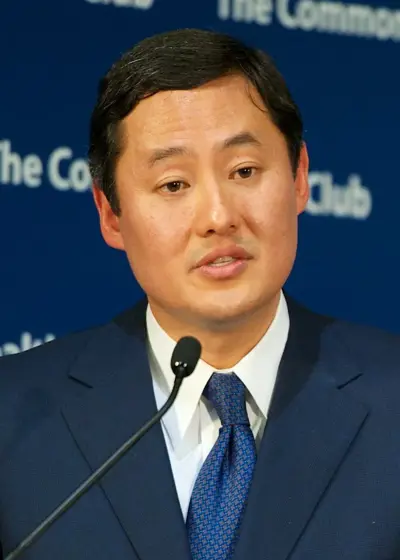
John Choon Yoo is a Korean-born American legal scholar and former government official best known for authoring the Torture Memos, which provided a legal rationale for the torture of detainees during the War on Terror. Yoo is the Emanuel S. Heller Professor of Law at the University of California, Berkeley, School of Law.
