William Graham Sumner Quotes
It is a beneficent incident of the ownership of land that a pioneer who reduces it to use, and helps to lay the foundations of a new State, finds a profit in the increasing value of land as the new State grows up.
Sumner, William Graham. What Social Classes Owe to Each Other. Harper & Brothers, 1883, p. 48.


Paine, one of America’s founding fathers and the man most responsible for influencing Americans to revolt, is generally not given much attention in modern times. One of the main reasons was that his philosophy regarding land and land ownership is today considered socialist if not communist. Paine’s other views are mostly Apple pie American, but this is shocking to many Americans.


Earlier, treaties had been negotiated whereby whites purchased certain Indian lands. Tecumseh and others had objected not only to the concept of land sale, but to those who had sold the lands {612650}.

The word “proprietor” at the time meant someone who had title to land. The title was then almost always tied up with the aristocratic titles. “Great proprietors” were therefore nobles who owned and controlled large land holdings. The “improvers” tended to be the businessmen—especially the manufacturers and the transportation magnates. Large landowners could just make money by renting parts of their land to tenant farmers. They needed no capital, no vision, not much skill or talent, and they didn’t have to take any risks.


Note that although the industrial revolution was beginning, the value of factories, inventory, machines, and raw materials were not yet recognized by some of the leading intellectuals of America. The perspective was totally agricultural.


Use included renting it. What he opposed was simply holding land when whites were driving Indians off their lands because all the unused land outside of the reservation was owned by someone and the asking price was very high. Ingersoll was considered to be the greatest orator and political thinker of his day, but his overt atheistic views curtailed his elected political career.

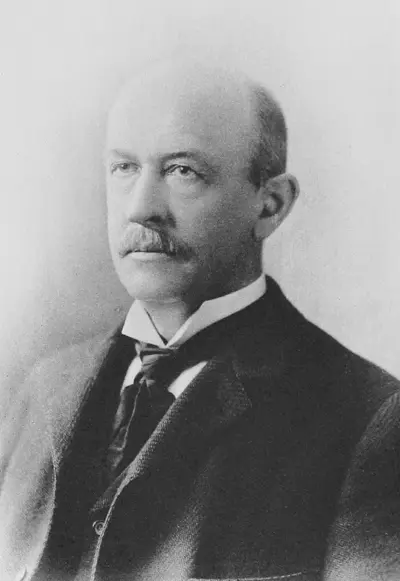
William Graham Sumner was a classical liberal American social scientist. He taught social sciences at Yale, where he held the nation's first professorship in sociology. He was one of the most influential teachers at Yale or any other major school. Sumner wrote widely within the social sciences, with numerous books and essays on American history, economic history, political theory, sociology, and anthropology. He supported laissez-faire economics, free markets, and the gold standard. He adopted the term "ethnocentrism" to identify the roots of imperialism, which he strongly opposed, and as a spokesman against it he was in favor of the "forgotten man" of the middle class, a term he coined. He had a long-term influence on conservatism in the United States.
