Calvin Coolidge Quotes
It has been attested by all experience that agriculture tends to discouragement and decadence whenever the predominant interests of the country turn to manufacture and trade.
Coolidge's rhetoric did not reflect the fact that his administration was totally indifferent to the serious plight of the American farmer in the 1920's.
Calvin Coolidge, 1872-1933, 30th President of the United States (Republican, MA), 1925
Sourced by: Eigen's Political and Historical Quotations


Executed by the English for his part in the Easter Uprising. This was a creative idea to being technology to bear on small farms. America was exploring cooperatives and other devices of trying to allow people who were not rich and had little or not capital, to utilize the emerging technology that would be so important.


What happened is that farmers over the year became either industrialized mechanized agricultural enterprises or peasants and the later did exactly what Capper predicted—moved to the cities. Agribusiness thrived and small traditional farmers were ruined unless they adopted the new technologies.
His prediction was accurate and the consequence was an increase in the production of agricultural products and a shrinking proportion of Americans employed in farming and ranching.

Official `Russian Communist Party Publication. There was no way that the farming peasants could get money for their crops. They had to turn over most to the government to feed the cities. But without money, the peasants could not get the goods manufactured in the cities and there was little motivation for the peasants to farm.


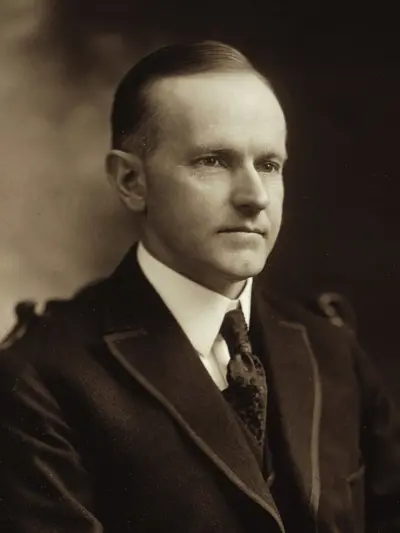
Calvin Coolidge was an American lawyer and politician who served as the 30th president of the United States from 1923 to 1929. A Republican lawyer from New England, born in Vermont, Coolidge worked his way up the ladder of Massachusetts state politics, eventually becoming governor of Massachusetts. His response to the Boston Police Strike of 1919 thrust him into the national spotlight and gave him a reputation as a man of decisive action. The next year, he was elected the 29th vice president of the United States, and he succeeded to the presidency upon the sudden death of Warren G. Harding in 1923. Elected in his own right in 1924, he gained a reputation as a small-government conservative and also as a man who said very little and had a rather dry sense of humor.
