Herbert Hoover Quotes
Whole towns, communities and forms of agriculture with their homes, schools and churches have been built up under this system of protection [tariffs]. The grass will grow in a hundred cities, a thousand towns; the weeds will overrun millions of farms if that protection is taken away
Herbert Hoover, 1874-1964, 31st President of the United States (Republican, IA), Speech, Madison Square Garden, New York City, October 31, 1932
Sourced by: Eigen's Political and Historical Quotations


Coolidge's rhetoric did not reflect the fact that his administration was totally indifferent to the serious plight of the American farmer in the 1920's.


Justifying high protective tariffs that would maintain high consumer prices:

Despite developed nation calls for free trade, The US, EEC and Japan maintain an extensive system of agricultural subsidies which are politically difficult to eliminate while expecting developing nations to eliminate their protectionist practices.

The issue of free trade has been controversial during the entire history of our Republic. At the time it was the Republicans who were the protectionists and the Democrats, the free traders.


Whitaker was right bet at that time his advice was not heeded. When Ireland late in the 20th century finally acted on his advice and eliminated almost all of their protectionism, the economy thrived and not only did the Irish emigration stop, but people began to immigrate to Ireland for the economic opportunity.


In England at the time, the liberals were for free trade and the conservatives against. In both England and America both liberals and conservatives have flip flopped their roles in foreign trade several times. Free trade is a two edged sword; it aids domestic growth, employment and prosperity in some cases and hurts them on others. And there are always winners and losers for each example of free trade within any country. The result is no long term commitment and much flip flopping.


Actually, the Agriculture Department was one of Lincoln’s greatest achievements. The subsidies and corporate welfare came much later. The biggest benefits were the land grant collages where agricultural research improved the yields and productivity and the Agricultural Extension provided training and technical assistance to American farmers making the United States the most efficient agricultural producer in the world. The subsidies and corporate welfare had and has nothing to do with the positive initiatives that Lincoln envisioned.

Arguing that Slavery inhibited a society from development ...


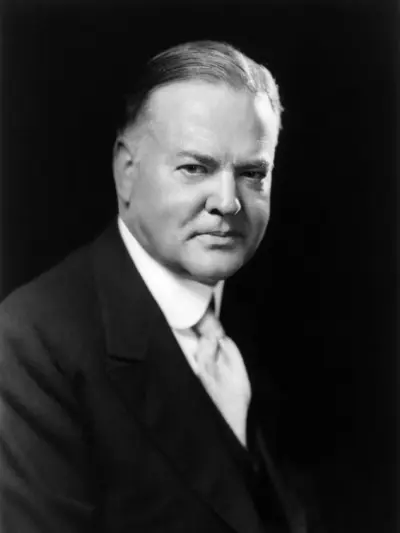
Herbert Clark Hoover was an American politician, businessman, and engineer, who served as the 31st president of the United States from 1929 to 1933. A member of the Republican Party, he held office during the onset of the Great Depression. Before serving as president, Hoover led the Commission for Relief in Belgium, served as the director of the U.S. Food Administration, and served as the third U.S. Secretary of Commerce.
