Robert Southey Quotes
It behooves us always to bear in mind, that while actions are always to be judged by the immutable standard of right and wrong, the judgments which we pass upon men must be qualified by considerations of age, country, station, and other accidental circumstances; and it will then be found that he who is most charitable in his judgment is generally the least unjust.
Southey, Robert. The Life of Wesley; and the Rise and Progress of Methodism. Vol. 1. Longman, Hurst, Rees, Orme, and Brown, 1820, p. 288.


Supreme Court Chief Justice Roger B. Taney, 1777-1864, had written the infamous Dred Scott decision requiring free states to return escaped slaves from the South. This decision widened the gap between North and South and made the Civil War almost inevitable. See {584921}.


The “compromise” admitted Misouri to the Union with the right to have slavery and Maine with the right to abolish slavery. The slave states had taken the position that states really had no right to abolish slavery at all, but they compromised on Maine. Many in the non slave states insisted on the aboloution of slavery everywhere, but compromised on Missouri. Luisa Adams, an implacable opponent of slavery on moral and religious grounds, condemned the compromise as politically expedient but morally bankrupt. She saw attempted compromise on the slavery issue as leading to disaster—current and future murder and degradation of human beings and postponing the issue until it would be out of hand.


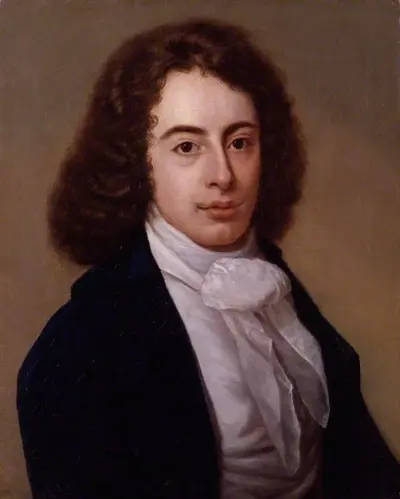
Robert Southey was an English poet of the Romantic school, and Poet laureate from 1813 until his death. Like the other Lake Poets, William Wordsworth and Samuel Taylor Coleridge, Southey had begun as a radical, but became steadily more conservative, as he acquired respect for Britain and its institutions. Other romantics, notably Byron, accused him of siding with the establishment for money and status. He is principally remembered as author of the poem After Blenheim and the original version of Goldilocks and the Three Bears.
