Charles Horton Cooley Quotes
Institutions-government, churches, industries, and the like-have properly no other function than to contribute to human freedom; and in so far as they fail, on the whole, to perform this function, they are wrong and need reconstruction.
Charles Horton Cooley, 1864-1929, Sociologist, Human Nature and the Social Order, 1902
Sourced by: Eigen's Political and Historical Quotations


Bourne was one of the first writers with a national audience to question the classic but never real “melting pot” theory of immigration and suggest the “salad” model though he never used the term.


He and Thomas Jefferson were the two most vocal propononents of this view amongst the Founding Fathers.

The public had been roused by the meatpacking scandal and the other exposes of the leading muckraking journalists—of which Baker was one. President Roosevelt had galvanized and led the public opinion to pressure congress and major great reforms were under way that would change America forever—see New York Times editorial {86516}.


He was following the lead of Colin Kaepernick—Quote 643305. Instead of standing and saluting as professional athletes have done for decades before games, Kaepernick had kneeled and refused to stand as a protest about the large number of unarmed Black young men who had been killed by police. . This caused great public criticism but also some initial support. Athletes who did this were potentially risking their multimillion dollar salary as this technically violated their contract to avoid anything embarrassing to the team. He also donated $1 million to programs in the area that were working to enhance Black/white understanding. Even those who disagreed with his choice of protest defended his right to do so, and after the initial furor, public opinion, while not in agreement about his method, tended to support him for having the courage of his convictions and using his celebrity for a worthy cause. McCourty and other players also followed Kaepernick’s lead. Soon it became a movement in professional and college athletics.


Wilson was very much the idealist and would not concur with the conservative view that the only obligation of a company is to its owners and shareholders.
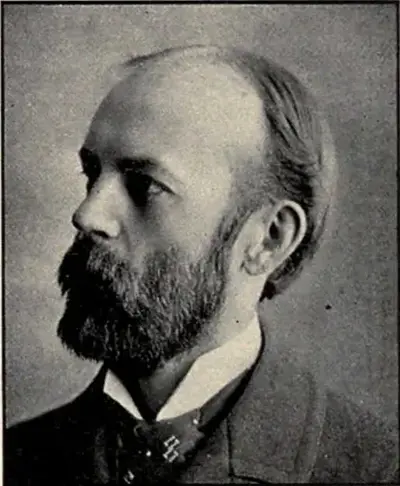
Charles Horton Cooley was an American sociologist and the son of Michigan Supreme Court Judge Thomas M. Cooley. He studied and went on to teach economics and sociology at the University of Michigan, was a founding member of the American Sociological Association in 1905 and became its eighth president in 1918. He is perhaps best known for his concept of the looking-glass self, which is the concept that a person's self grows out of society's interpersonal interactions and the perceptions of others. Cooley's health began to deteriorate in 1928. He was diagnosed with an unidentified form of cancer in March 1929 and died two months later.
