Ray Stannard Baker Quotes
Signs everywhere now show a great moral awakening—the cleaning out of rotten business & still more rotten policies. But we’ve only begun! For the first time, men were questioning the fundamentals of democracy, inquiring whether we truly had self-government in America, or whether it had been corrupted by selfish interests. This questioning came not alone from what one might call the working class, but from middle America as well.
The public had been roused by the meatpacking scandal and the other exposes of the leading muckraking journalists—of which Baker was one. President Roosevelt had galvanized and led the public opinion to pressure congress and major great reforms were under way that would change America forever—see New York Times editorial {86516}.
Ray Stannard Baker, 1870-1946, Journalist, Letter to his father, June 23, 1906
Sourced by: Eigen's Political and Historical Quotations


Roosevelt was on a crusade to eliminate the vicious monopolies and trusts of the time. The number of terms he used to describe them was large but this has become the most memorable and most frequently quoted. See {585244} for some of the other terms he used. While this phrase was original with FDR, his relative, Theodore Roosevelt, used the term “malefactors” in a similar meaning in {585244}.


See {586119} for an earlier English version of this point.


Greenspan and some others assumed that the shareholders and the executives who ran the financial institutions had the same vested interests. But the executives had disconnected themselves from the fate of the shareholders, by having Golden Parachutes to protect the executives even if the business failed and they were fired. And they got their bonuses immediately so by the time the authorities and the shareholders discovered that the profits the bonuses were paid for were illusory, the bonus money was safely stored in a secret offshore bank. But if things went wrong, there was always the play of getting a government bailout which would keep the executives getting their huge bonuses and keep the shareholders from losing their money as the taxpayers covered most of the losses.


See {640687}. He was then very worried about the influence of money in politics and was willing to risk his own reelection by limiting his contributions. And he was the Republican presidential candidate so his policy was particularly unusual. A century later money in politics had ballooned to a much larger problem as Taft’s action had little or no effect on the overall relationship between money and politics outside of his campaign.

She was at the time the European Commissioner for Competition


Referring to the Supreme Court 5-4 decision—Citizens United v. Federal Election Commission--that allows corporations and rich individuals to spend unlimited amounts of money campaigning to the advantage of particular candidates.


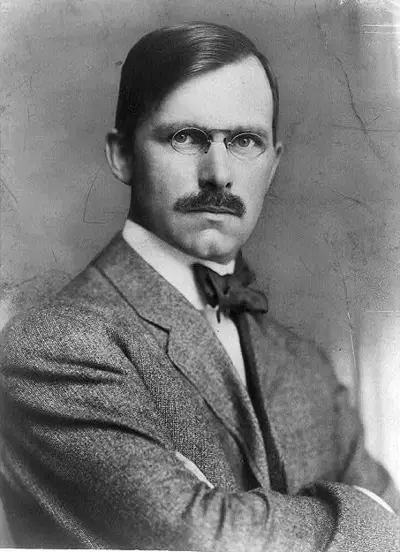
Ray Stannard Baker (also known by his pen name David Grayson) was an American journalist, historian, biographer, and author.
