Wei Jingsheng Quotes
Opening China to the world has dramatically affected the movement for democracy. The process of opening up is a process whereby the government loosens its control of the people. On the other hand, simply opening the economy is not enough. Very few people are actually able to enjoy the economic reforms. The privileged classes, or those who have connections with the privileged classes, enjoy more benefits from an open policy.
Wei Jingsheng, Chinese Dissident, The Markkula Center for Applied Ethics, Reflections on Working Toward Peace
Sourced by: Eigen's Political and Historical Quotations


Stalin was then only 26 years old. This was more than a decade BEFORE the Russian Revolution and Stalin was a young left wing revolutionary planning how to bring about a revolution and how the society should operate thereafter. He was then much the youthful, intellectual, Georgian idealist.


Although India has been a thriving democracy since its independence. Nonetheless, there has been a strong governmental tradition in India of great regulation and control of business and the economy.


The public had been roused by the meatpacking scandal and the other exposes of the leading muckraking journalists—of which Baker was one. President Roosevelt had galvanized and led the public opinion to pressure congress and major great reforms were under way that would change America forever—see New York Times editorial {86516}.


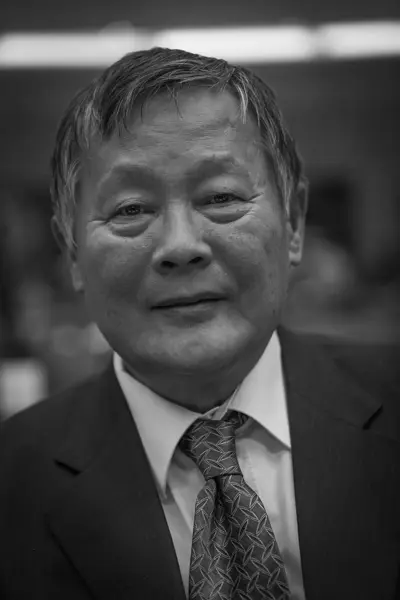
Wei Jingsheng is a Chinese human rights activist who is known for his involvement in the Chinese democracy movement. He is most prominent for having authored the essay "The Fifth Modernization", which was posted on the Democracy Wall in Beijing in 1978. Due to the manifesto, Wei was arrested and convicted of "counter-revolutionary" activities, and was detained as a political prisoner from 1979–93. Released briefly in 1993, Wei continued with his dissident activities by speaking to visiting journalists, and was imprisoned again from 1994–97, spending a total of 18 years in different prisons. He was deported to the United States on 16 November 1997, on medical parole. Still a Chinese citizen, in 1998 Wei established the Wei Jingsheng Foundation in New York City (now based in Washington D.C.) whose stated aim is to work to improve human rights and democratization in China.
