James McPherson Quotes
The use of power to bring about radical social and political change in the 1860s carries important implications for the use of federal power to bring about change in matters of race, citizenship, and social welfare today. So long as this remains true—and there us no sign that these issues will go away any time soon.
James McPherson, Historian, “My Road to the Civil War”, The Wilson Quarterly, Summer 2011
Sourced by: Eigen's Political and Historical Quotations


Refers to the deformations of family life entailed by slavery


Stalin was then only 26 years old. This was more than a decade BEFORE the Russian Revolution and Stalin was a young left wing revolutionary planning how to bring about a revolution and how the society should operate thereafter. He was then much the youthful, intellectual, Georgian idealist.

RSD Party platform. The Russian Social Democratic Party was in 1887 a very modern democratic party inside the feudalism of Tsarist Russia. The Tsar and the nobility thought them wild radicals and yet their party platform was not only reasonable, but in large part influenced by the American Constitution, Bill of Rights, and then current practices in America. It is hard to believe but at the time a Russian could not work at an occupation he chose but could only do the work that was permitted by the aristocrat who owned the land he lived on. The Tsar, Alexander III, was a terrible autocrat, unlike his father who had desired some reform and abolished serfdom. All efforts at any kind of Democratic reform were put down, and Russian reformers in this party tended to split between those who still hoped for reform and those who saw violent revolution as the only hope. By 1906 the party which had no success at any of their planks of reform had split into two main subgroups—the Mensheviks and the Bolsheviks—both active revolutionary groups, but the Mensheviks tended to be more democratic and moderate and wanted to include the workers and the middle class whereas the Bolsheviks saw the middle class as part of the problem and argued for a more radical political structure. The real split occurred after the 1917 revolution when the Mensheviks lost popularity among the Russian revolutionists as not being radical or realistic enough in what it would take to transform Russia. The Bolsheviks gained control and by 1921, they had outlawed and purged the Menshevik party. That was the last hope of democracy in Russia, as the Bolsheviks model was that which guided the country until the fall of the Soviet Union.


King and his associates along with a large number of students were arrested for protesting racial discrimination in Selma. The Chief of police was told that this is just what King wanted. His was a deliberate attempt to get publicity by arresting and prosecuting a group of ministers and school children. So Chief Baker told King that they were not under arrest. So King went outside the jail where many journalists had congregated, hastily called a press conference, and publicly admitted to deliberately drawing attention to the conditions.


It was finally passed and signed into law on August 22, 1996

Rustin urged them to accept a compromise what would give them the majority of everything that they were demanding but not all. See {637623} for Moses’ counter-argument.


Note the early use of the term “March on Washington.” See {625658}.

In the middle of WWII where Black soldiers were fighting and dying on the war front, there were fears of racists that the Blacks would return and demand full equality and an end to segregation. There were threats in the South of armed attacks against any returning serviceman who would push for desegregation.

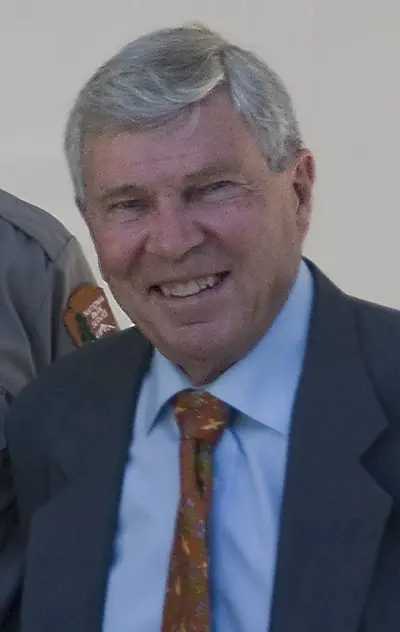
James M. "Jim" McPherson is an American Civil War historian, and is the George Henry Davis '86 Professor Emeritus of United States History at Princeton University. He received the 1989 Pulitzer Prize for Battle Cry of Freedom: The Civil War Era. McPherson was the president of the American Historical Association in 2003.
