Muhammad Ali Jinnah Quotes
India's blood and India's gold was sought and unfortunately given - given to break Turkey and buy the fetters of the Rowlatt legislation.
Pirzada, Syed Sharifuddin, editor. Foundations of Pakistan: All-India Muslim League Documents, 1906-1947. Vol. 1, National Publishing House, 1969, p. 544.


That is exactly what happened. However it would not happen until after the Second World War.


The Partition was accompanied by over 2 million murdered Indians as India was divided into a smaller India with almost all the Hindus and Sikhs and a slight majority of the Muslims and Pakistan with all Muslims who made that choice. Pakistan has been trying to de stabilize the area ever since to gain control of more land and became a theocracy and military dictatorship—sometimes de facto and sometimes de juro.

The Turks had massacred the vast majority of their Armenian population, and treated the Greeks badly killing and them many of them from territories the Ottoman Turks had conquered. Jews fared better but were 2nd class citizens. Bristol was the American State Department’s senior official and was very “understanding” of the murders and ethnic cleansing despite the fact that President Wilson and most American politicians were very opposed to the Turkish massacres. See {620614} and {620599} . Two factors makes this quotation very significant. First, at the time the State Department was not really under the control of either the President or the Congress. It was not rare for the Department to have its own policies and implement them. This began to change in WWII and FDR exercised much more control than previous presidents since Theodore Roosevelt. The second factor is that there were many racists throughout the State Department—Bristol was only one. There was little concern for minorities’ welfare and the emphasis was on commerce. See {620600} Even in Truman’s administration, the President had massive opposition from the State Department for his policy of recognizing the State of Israel. Today, this kind of racism in the State Department is very rare, and human rights has been one of their major concerns. There were many changes in 75 years.

The Ottoman Turks were slaughtering Armenians; the Russians had pogroms against the Jews, and the Blacks were being tortured or killed if they would not work for the Belgians in the Congo. TR was in favor of interventionism to protect populations and human rights. However, the then President, Woodrow Wilson, was far more timid. See {620612}

The Ottoman Turks, at war with Russia, exterminated a large proportion of the Armenian population of the then Turkish Empire. Some of the ethnic Armenians were working with Armenians in greater Russia and thus were a risk to the Turks. However, they starved, shot, beat, hung, and bayoneted hundreds of thousands of ethnic Armenians, wiping out entire villages and towns. Despite the fact that women and little children were all killed, Modern Turkey even into the 21st century refused to admit that this was a genocide even though there was ample documentation to prove it was not spontaneous but government ordered by the “Young Turks” then controlling Turkey. See {620603} and {612638} for examples. The modern Turks maintain the view expressed during the genocide that Armenians were a threat to Turkish Independence.

Almost all former colonial nations resent the colonialism and tend to overlook some of the benefits. Like European colonialism, the Ottoman Empire brought many benefits and advancements to their subject peoples but the oppression is what is most remembered by future generations. Despite the terrible history of the Ottoman Empire in the Armenian Genocide and some other massacres, the Ottoman Empire had more than a 500 year influence on a great part of the world�Islamic and Christian – much of which was very valuable to the world even today.


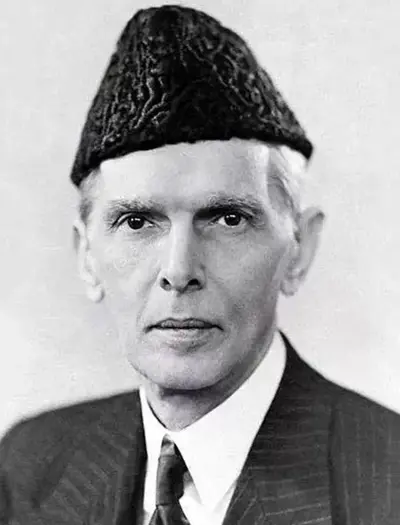
Muhammad Ali Jinnah was a barrister, politician and the founder of Pakistan. Jinnah served as the leader of the All-India Muslim League from 1913 until the inception of Pakistan on 14 August 1947, and then as the Dominion of Pakistan's first Governor-General until his death. He is revered in Pakistan as the Quaid-i-Azam ("Great Leader") and Baba-i-Qaum ("Father of the Nation"). His birthday is observed as a national holiday in Pakistan.
