Sri Aurobindo Quotes
Indian religion has always felt that since the minds, the temperaments and the intellectual affinities of men are unlimited in their variety, a perfect liberty of thought and of worship must be allowed to the individual in his approach to the Infinite.
Aurobindo, Sri. The Renaissance in India. Sri Aurobindo Ashram, 1951, p. 182.


Spinoza’s ideas were considered so radical and dangerous that he was the only man in history who was excommunicated by the Catholics, the Jews and the Muslims.


The modernity of this ancient leader is striking. For another example see his view on the importance of engendering supportive public opinion: XXX

Despite this clear statement, later the Colonial legislature withdrew the franchise from Roman Catholics. See {624149}. Despite this temporary restriction of religious freedom, Rhode Island and Connecticut were far ahead of the other New England colonies in freedom of conscience.

The wording was rejected and the delegates insisted upon the original proposed language: “Well aware that Almighty God hath created the mind free …” This is a very important historical quotation because it shows that Henry and a few others wanted to make the society Christian centric, However, the majority insisted that it be non-sectarian. Many of the delegates rejecting the “Jesus Christ” language were themselves practicing Christians, but they were aware of the terrible religious wars and strife in Europe and between Christians and Muslims as well as the persecution of Jews, Quakers, and other sects; they did not want that in America so they rejected the idea of an established Christian Church or culture.


It is an error to say that. It is an error to say that He was the last Pope to hold temporal power. Years later, the Vatican rejected this view and adopted the modern concept of freedom of conscience. See {612714}.


William was a Catholic himself. Spain then controlled Holland.
The Governor of New Amsterdam, Peter Stuyvesant, was a bigoted Protestant of the Dutch Orthodox church and did not want to allow non-Protestants into the Colony, However, he was overruled by the Directors of the Dutch West India Company which rolled the colony designed to be a money making enterprise. Jews and others were allowed to enter and become citizens, however while they could worship in any way they chose in their own homes, they could not build any places of worship of have any public prayer of other aspects of their religion. This was the hypocrisy to which Bangs refers. However, at the time, it was more liberality and tolerance than most of the Christian world.

Her sister, Mary, the previous Queen, had over 200 Englishmen burned at the stake for their Protestant beliefs. Elisabeth wanted no part of the government trying to determine or regulate the religious beliefs of Englishmen.


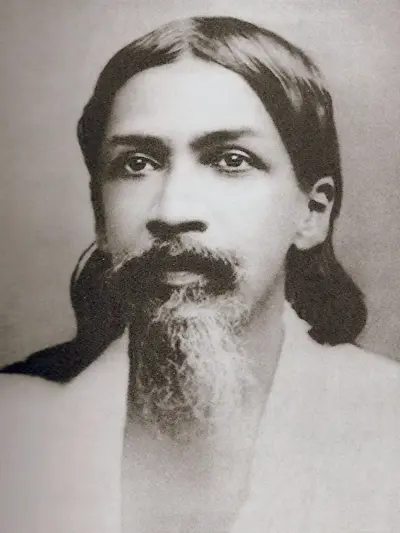
Sri Aurobindo was an Indian philosopher, yogi, maharishi, poet, and Indian nationalist. He joined the Indian movement for independence from British rule, till 1910 was one of its influential leaders and then became a spiritual reformer, introducing his visions on human progress and spiritual evolution.
