Winston Churchill Quotes
In war: resolution. In defeat: defiance. In victory: magnanimity.
Winston Churchill, 1874-1965, British Prime Minister (Conservative), Epigraph, The Second World War
Sourced by: Eigen's Political and Historical Quotations

There are some who see Israeli behavior after they were victorious in defeating the Arab attacks and attempted invasions.

There is a corollary to this proverb, that frequently reflects itself in Arab culture. It is that one who is not strong must never concede. To concede out of strength is manly and noble. To concede out of weakness is cowardly and base. Middle Eastern International politics is totally irrational to Westerners when a badly defeated country of group will often not even meet with the victors to discuss peace or terms of surrender. It is the victors only who can make concessions without losing dignity and respect.


The proverb dates from the Samurai era of Japan where the Samurai in battle wore metal and leather protective helmets. These were secured to their heads by a tight helmet chord. Many societies, after a war and desiring peace would reduce the spending for the military, eliminate conscription, and weapons production. The result often was a more attractive target for enemies wanting land or revenge. Thus, the proverb warns that immediately after a victory, prepare for the next battle and do not let your guard down.


This statement is perhaps the greatest and most eloquent description of the United States exceptionalism and its behavior in WWII. Such a statement could only come from a non-American.

Adams is quoting from Cato, a play by Joseph Addison.

It was this code, and its implementation in Saipan, Okinawa, and other Japanese held islands taken by the allies that caused Japanese soldiers to fight to the death or commit suicide. The prospect of this code being followed by Japanese soldiers, civilians or both in an invasion of the Japanese mainland, was one of the major arguments in favor of dropping the Atomic Bomb in World War II.


This is the modern view of the old Chinese adage with a modern democratic motivation.


After a victory, Alexander did not treat the newly conquered regions badly. In most cases the quality of lives of the average person improved. Most important, he did not interfere with local cultural traditions and his men intermarried with the conquered population.

It was then customary to return with the head of a killed Samurai which would be made up as if in life so the dead man could be recognized. That way, the victor received more recognition with the importance of the Samurai who he defeated.

The Muslims were poised to make the final assault on Constantinople. Religious leaders were whipping up the troops by calling for Jihad and telling them those who fell in battle would enjoy immediate access to Paradise and the virgins that went with Islamic martyrdom. However, the Sultan did not trust religious fervor alone. He said this to the leaders of his soldiers who then spread the word. The City fell the next day. The troops had 3 days of looting, rape and pillage which the Sultan had promised, but there was almost no further damage to the infrastructure other than that caused by the seige cannons.


The Muslims conquered Spain and controlled it to one extent or another for 600 years.
Response to an offer by Commodore Preble to exchange prisoners.
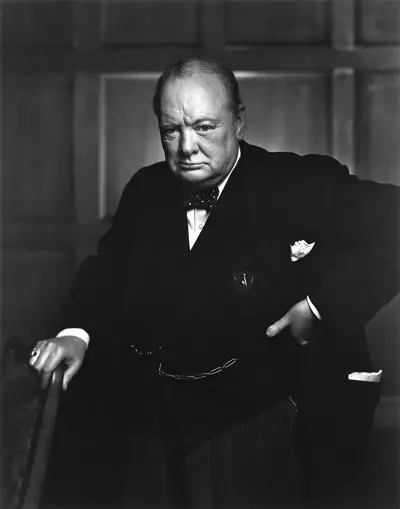
Sir Winston Leonard Spencer Churchill, KG, OM, CH, TD, DL, FRS, RA was the Prime Minister of the United Kingdom from 1940 to 1945, during the Second World War, and again from 1951 to 1955. Apart from two years between 1922 and 1924, Churchill was a Member of Parliament (MP) from 1900 to 1964 and represented a total of five constituencies. Ideologically an economic liberal and imperialist, he was for most of his career a member of the Conservative Party, as leader from 1940 to 1955. He was a member of the Liberal Party from 1904 to 1924. Churchill was also well known for his military career and as a historian, painter and writer, and among his many awards was the Nobel Prize in Literature.
