Kenneth Scott Latourette Quotes
In the third century after Christ the faith continued to spread.
Latourette, Kenneth Scott. A History of Christianity. Harper & Brothers, 1953.


This was a large part of the “moral” justification of conquering the New World peoples.


The Governor opposed Jews being allowed into the colony at all, but was overruled by the Dutch West India Company. He feared that this would set a precedent and then Catholics and other “dissenters” would come to New York. He then prohibited them from worshipping as Jews {35223} but was again overruled. He was a very unpopular Governor who himself was a Calvinist fundamentalist having been the son of a Calvinist minister and studied for the ministry himself. The company set the standard of religious tolerance and enforced it. See {611104}. The governor predicted the consequence and the precedent did indeed allow Catholics to come to New York and both Jews and Catholics have been significant New York population groups ever since.


Constantine the Great. This is one of Constantine’s major defenses of his decision to adopt Christianity. Scholars today still argue as to what part practical politics played in Constantine’s conversion and what part was his personal religious conversion.


Jefferson was a deist but had little love for the organized religions and did not consider the Bible as the revealed word of God.

Some of the founding fathers were deeply religious men while others were not so. Some varied in their believes at different times of their lives, and a number were not very favorable towards orthodox religion. At the time, Roman Catholic and Protestant churches were persecuting other religions throughout Europe and people were still being killed for their “heretical” beliefs. Most important to some of them, kings and other monarchs whom they abhorred, all at the time claimed the Divine Right of Kings and the established churches were the most important support for monarchs. At the time most organized religions were opposed to freedom of conscience and certainly opponents of separation of church and state. American churches tended to take on American values but were never given the chance to dominate the American government they way many religions had in Europe and the rest of the world.


This Sura of the Koran warns the faithful that the non-Muslims of the world have as a major objective the Conversion of Muslims. While this was and has been the case in times past starting even before the Crusades, many Christians felt it as an obligation to either convert the Muslims or to kill them. In modern times there have been Christian missionaries who have had an objective of converting Muslims, but no Christian government has had that as a policy for a long time now. But most Muslims are told this is so today and the Koran warned of this. The result is that many Muslims—particularly those who have not had much contact with other religions—believe that because of this, they will be forever fighting heretics like Christians. For this reason, Islam’s future is under attack.

Since Muslims try and convert others, one who changes religion and becomes a Muslim is exempt. The death penalty is reserved for Muslims who leave the religion.

This church which was so active later in sending missionaries throughout the world, at first thought the idea absurd.


Christian Neophytes were Indians who claimed that they had converted to Christianity. The French initially banned giving or selling firearms to the Indians of North America. However in 1640, they made an exception to provide arms to the Huron Indians who they thought had converted to Christianity. Four years later the Jesuits were using guns as the major motivation for conversion of Indians. The hypocrisy of using weapons of war to attract converts to a religion of peace gave way to the incredible success that the trading of guns for souls had achieved. The French military also thought that the armed Indians could be used as allies in the coming battle with England for control of North America. The English then armed their Indian allies, and the French and Indian Wars saw armed Indians on both sides.

The Emperor, who had persecuted many Christians by blinding them was himself going blind from an eye disease. He sought pardon from the Christians and their God. This statement he gave before the Christian bishops.
See {624641} for Iranian confirmation of its discriminatory policy. The Iranian "justification for murdering Bahais is this: The Behai were originally Muslims and then they created an heretic form of Islam. Under Islamic Law (Sharia), any Muslim who converts away from Islam to ANY other religioun must be out to death. As barbarous as this sounds, the irrational thinking is the same as that of the Catholic Church when Protestant chiurches emerged. All of them were to be put to death. However that was over 600 years ago, and humanity has much imporoved standards today. But the Muslims are 700 years younnger than the Catholic Church and some point out that they are behaving the same way as the Catholics, brutal as it is, when the Church was at the same level of maturity as Islam is today.

At that time, and in much of the world today, religious preaching and those who do it are licensed by the state. Lucian’s response was one of the first statements that governments and temporal powers endorsement was not required, nor was any formal ordination or grant of authority from a formal church as existed among the pagans of the time where the religion was seen as another extension of the state. Even in America there is some ambivalence on this point. Many religions require not only training but a grant of authority from the religious hierarchy. Others such as some Baptists and many Protestant Fundamentalist groups believe that no specific authority is needed other than the “calling of god.” Lucian was apparently the first person to claim the authority as an individual. He was burnt alive for his position. There is a second Saint Lucian. To distinguish the latter is often referred to as Saint Lucian the Syrian.

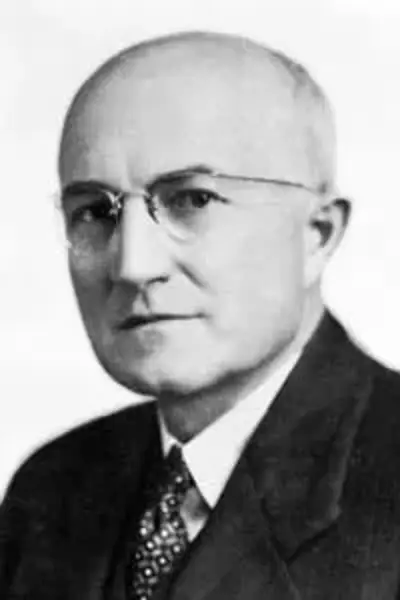
Kenneth Scott Latourette was an American historian of China, Japan, and world Christianity. His formative experiences as Christian missionary and educator in early 20th century China shaped his life's work. Although he did not learn the Chinese language, he became known for his magisterial scholarly surveys of the history of world Christianity, the history of China, and of American relations with East Asia.
