Muhammad Quotes
He who changes his religion must be killed.
Since Muslims try and convert others, one who changes religion and becomes a Muslim is exempt. The death penalty is reserved for Muslims who leave the religion.
Muhammad, 571-632, Prophet and Founder of Islam, Quoted in 'Abdurrahmani'l-Djaziri, The Penalties for Apostasy in Islam
Sourced by: Eigen's Political and Historical Quotations


The King, a religious exremist fanatic, was a great supporter of the Inquisition whose excesses were horrible during his reign.

It is this verse that for some Muslims justifies terrorism against non-Muslims. See {584354} for a specific example. There are similar provisions in the Old Testament which a few extremely conservative Jews and Christians have used to advocate for blasphemy being a capital crime. Note that if an unbeliever repents and becomes a Muslim, he should be spared.

In September of 2006 Pope Benedict XVI, quoted this statement in a lecture to theological students. There was much distress and protest among Muslim leaders.


Bashir advocates adapting Sharia—Islamic Law—for all people in Indonesia—regardless of their religion or their preference for separation of church and state. This is diametrically opposite to an Islamic Syrian poet of 1000 years ago—see {624477}. Many Muslims have become more intolerant than some of their earlier scholars. Bashir also differs from most Indonesian Muslims who have historically not shared his bigotry and intolerance.

Ingersoll was considered to be the greatest orator and political thinker of his day, but his overt atheistic views curtailed his elected political career.


See {586041} for a Koranic quotation that urges world domination by Islam. In this quotation, The Prophet was talking to his followers at a time when Islam was not even a dominant religion in Arabia. And war was the way in which tribes, groups, and religions and sects, established themselves and grew. Although there are other Koranic passages which tell the faithful that people can only legitimately come to Islam through individual commitment and willingly, this passage not only seems to contradict that but also reflects a desire to punish and disgrace “non-believing” groups. This vengeance motif is also contradictory to much else of the Koran which generally preaches love, forgiveness, and understanding. However, there are contradictions and intellectual inconsistencies within the Koran just as there are within the Old and New Testaments.
See {586039} for a quotation that goes further and seeks to punish and humiliate the non believers. This sura is often used by those wishing to illustrate the intolerance of Islam—especially of other religions. They fail to put this into the context of the Old Testament which proscribed death for heretics or the history of Christianity regarding the murder of nonbelievers. The difference is however, that a very small proportion of Jews or Christians today believe in following Biblical instructions in this respect while the proportion of Muslims who believe in the literal interpretation of scripture on these points is much larger. However there are Islamic modernists and moderates throughout the world who reject this notion of warring on all other religions and there is a struggle going on within Islam itself.

In an orthodox Muslim nation, freedom of speech as a right is impossible.


This is the justification that some Muslims use for the murder of prisoners of war if the war is perceived to be an attack on Allah. This for most includes Westerners.

His call for the Pope’s assassination in a public meeting produced counter-protests all over England. Choudary had earlier threatened British Jews. See {615445}.

Most political cartoons offend. The problem for the Yale Press was that if they did not print the cartoons, the violence and intimidation of the most extreme Muslims will have been rewarded as a strategy. If they printed, some people will be injured and killed in the likely rioting. If rioting did not occur spontaneously, it would be whipped up by the extremists. A Hobsen’s choice for publishers the world over that is exactly what the most extreme Muslims have planned.
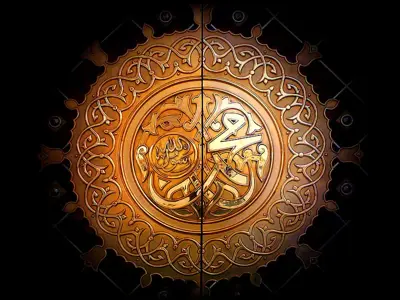
Muhammad was an Arab religious, social, and political leader and the founder of Islam. According to Islamic doctrine, he was a prophet, sent to preach and confirm the monotheistic teachings of Adam, Abraham, Moses, Jesus, and other prophets. He is believed to be the final prophet of God in all the main branches of Islam, though some modern denominations diverge from this belief. Muhammad united Arabia into a single Muslim polity, with the Quran as well as his teachings and practices forming the basis of Islamic religious belief.
