George Bernard Shaw Quotes
The heretic is always better dead. And mortal eyes cannot distinguish the saint from the heretic.
Shaw, George Bernard. Saint Joan. Constable and Co., 1924, p. 89.

Since Muslims try and convert others, one who changes religion and becomes a Muslim is exempt. The death penalty is reserved for Muslims who leave the religion.

The King, a religious exremist fanatic, was a great supporter of the Inquisition whose excesses were horrible during his reign.


While Aquinas brought much wisdom and good to the Church, this statement and others laid a foundation for murdering non-believers and organizing the Inquisition.


Ingersoll was considered to be the greatest orator and political thinker of his day, but his overt atheistic views curtailed his elected political career.

He was assassinated by his bodyguard the following week. See {620972}. This appears to be the first time that a politician who was threatened with harm chose social media—in this case a Tweet--to inform supporters of his situation. The “blasphemy” for which he was accused was to oppose the death penalty for saying or writing anything that was heresy or blasphemy as interpreted be fundamentalist Muslims,


Servetus’ book On the Motion of the Heart and Blood of Animals, was so threatening that of the 1000 copies that were printed only 3 survived the burning including ironically Calvin’s personal marked up copy.


He had whipped the crowd up into a feverish pitch until someone rushed the bound and tied blacksmith and stabbed him to death. He had only criticized Mathias for being too harsh and stern a leader.


This edict gave great support to the Inquisitors of all Catholic countries. See {617572}


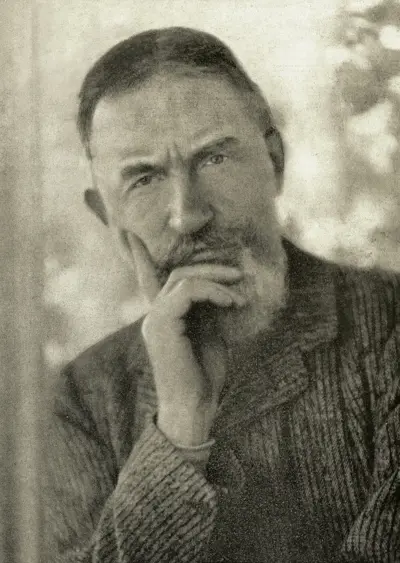
George Bernard Shaw, known at his insistence simply as Bernard Shaw, was an Irish playwright, critic, polemicist and political activist. His influence on Western theatre, culture and politics extended from the 1880s to his death and beyond. He wrote more than sixty plays, including major works such as Man and Superman (1902), Pygmalion (1912) and Saint Joan (1923). With a range incorporating both contemporary satire and historical allegory, Shaw became the leading dramatist of his generation, and in 1925 was awarded the Nobel Prize in Literature.
