Ibn Khaldun Quotes
In the early stages of the state, taxes are light in their incidence, but fetch in a large revenue...As time passes and kings succeed each other, they lose their tribal habits in favor of more civilized ones. Their needs and exigencies grow...owing to the luxury in which they have been brought up. Hence they impose fresh taxes on their subjects...and sharply raise the rate of old taxes to increase their yield...But the effects on business of this rise in taxation make themselves felt. For business men are soon discouraged by the comparison of their profits with the burden of their taxes...Consequently production falls off, and with it the yield of taxation.
This inverse relationship between rate of taxation and revenue sometimes is referred to as the Khaldun-Laffer Curve or the Laffer Curve. However, Khaldun appears to by the first to document the relationship, David Hume, Keynes, and others have since. This quotation’s exact source is unknown and may possibly be a bogus quotation as it reflects a classic view of one of the partisan political philosophies. However, there are several references and for now we lean toward accepting it as authentic. Khaldun was one of the world’s greatest polymaths who among his other accomplishments was the “Father of Sociology” and was the leading Islamic intellectual of his era.
Ibn Khaldun, 1332-1406, Tunisian Islamic astronomer, economist, historian, Islamic jurist, Islamic lawyer, Islamic scholar, Islamic theologian, mathematician, military strategist, nutritionist, philosopher, social scientist and statesman, Attributed Statement on taxation
Sourced by: Eigen's Political and Historical Quotations


This is the most articulate historical statement of the modern conservative mantra regarding taxes. However, one change has taken place. The words “necessarily” and “often” tend to be left out of the more modern ideological statements. Mellon’s original statement has never really had any politicians or economists who disagreed. Politicians of all economic persuasions have generally accepted the Mellon statement but the extreme conservatives’ creed is that a lowering of taxes always produces more revenue and a tax increase will inevitably lead to greater tax revenue—a position which Mellon never took. Mellon however was very solicitous of the wealthy, felt the welfare of the nation depended on their prosperity, and was a strong advocate of what was later called ‘trickle down’ economics {628592}.


The Laffer curve was a mathematical, economic curve supposedly showing the relationship between tax rate and government revenue from taxes. In Laffer’s version of this curve, as interest rates go down, revenue from taxes goes UP because according to Laffer, there will be much more economic activity if taxes are lowered. In reality this has happened rarely in certain countries and in a very narrow range of tax deduction. As Chretien observes if you lower the tax rate to zero according to the Laffer curve this should maximize revenue but obviously it does not because with a zero rate there are no taxes collected even if the economy is booming. The Laffer curve was ideologically popular with those politicians wanting to lower taxes, but it never stood up to serious analysis and never worked in practice as Chretien observes. As a result, some people refer to the curve as the Laughter curve.

This notion of state owned industries where the profits can pay for some of the costs of operating a government. In modern cases like China, Egypt and Indonesia, the military owned industries the profits of which defrayed the general budget burden. The problem however, has always been that the government tends to give preference to government owned industries in purchases and the lack of competition generally produces inefficient companies over time.


This has long been a principle of most politicians responsible for taxation and national budgets. A forced loan, was a practice where instead of taxing and industry like banks, the government requires that the loan the government a certain amount which the government pays back with interest. For the banker, this is preferable to a bank tax which he will never get back,, but then the interest has to be paid by everyone. If the benefit or its potential is to accrue to all citizens, then all the citizens should share in the burden—hence general taxes. See {639883} for a similar contemporary view.


Abd al-Rahman Ibn Mohammad. He is generally regarded to be the World’s first social scientist. The largest statue in Tunisia of not of a military leader of king, but of this social scientist. He was the first in history to lay the foundation of a theory for the optimum rate of taxation
Husayn Ali Nuri. This was a series of letters which he wrote to Napoleon, the Sultan and the other rulers of the day. At the time he was exiled to Edirne by Ottoman Sultan Abdulaziz.
In 1992 Colorado passed a Taxpayer's Bill of Rights, known as TABOR that requires that spending increases get voter approval and the state refunds surpluses through a series of tax cuts. So the state ended up with the problem that Zelinski described.


This early cry for a graduated income tax interestingly coupled it with a reduction of corporate taxes. The former became a major plank of the Democratic Party, and the latter of the Republicans. In America, third minor parties, even though they do not win elections sometimes do influence the political scene by putting ideas on the national agenda.


See {619116}. for a related idea of his.

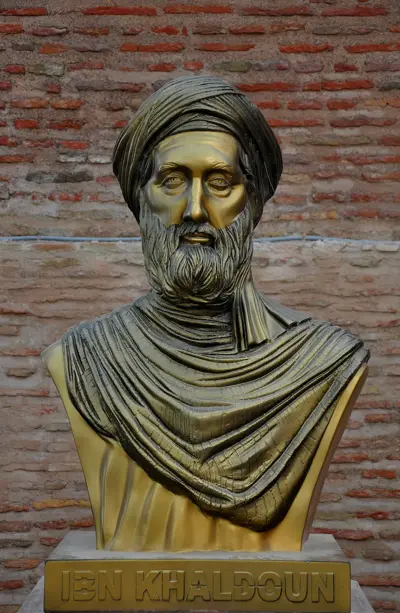
Ibn Khaldun was an Arab sociologist, philosopher and historian who has been described as the founder of the modern disciplines of historiography, sociology, economics, and demography. Niccolò Machiavelli of the Renaissance and the 19th-century European scholars widely acknowledged the significance of his works and considered Ibn Khaldun to be one of the greatest philosophers of the Middle Ages.
